| CASIO
SA-21 |
small
keyboards with complex lo-fi wavetable sounds |
| Casio
SA-41, SA-8, SA-2, PA-31,
KA-20,
TA-10 |
|
|
These keyboards all belong to the Casio SA-21 hardware class,
which was the direct successor of Casio SA-1
hardware. Sound engine and behaviour are basically identical; the only
change was that the newer CPU supports 5 different demos (through 5 OBS
buttons) and 5 drumpads. So I only describe here the differences to SA-1.
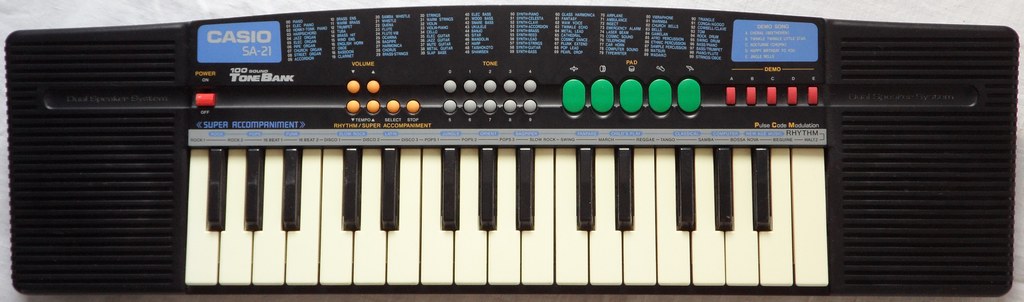
Casio SA-21
This midsize keyboard from 1992 (embossed case date) is likely the most
common of the series. A bit annoying is that volume can not be set lower
than ambient volume.

It was also released as Casio SA-25/ SA-38/ SA-39 (seen
on webshops/ eBay) and as Realistic Concertmate-460 (seen
on YouTube). Also a white SA-21 was made.
different main features:
-
32 midsize keys
-
2 built-in speakers
-
polyphony 4 notes (only 3 with accompaniment)
-
volume +/- buttons (5 steps, reduce bit resolution badly)
-
5 drumpad buttons {hihat, base, snare, agogo, cymbal}
-
CPU= "OKI M6387-11, 243540"
(30 pin SDIL)
-
5 demo melodies (complex orchestrated)
-
Choral (Beethoven) [= "Ode to Joy"]
-
Twinkle Twinkle Little Star [very faint main voice]
-
Nocturne (Chopin)
-
Happy Birthday To You
-
Jingle Bells
In opposite to the predecessor Casio
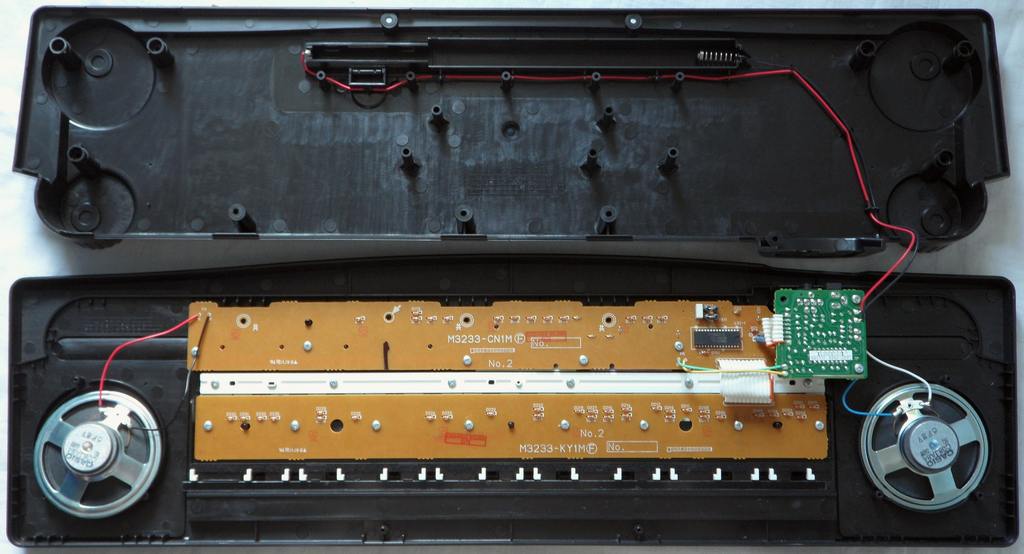
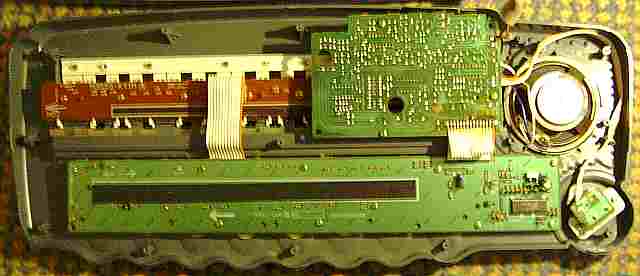
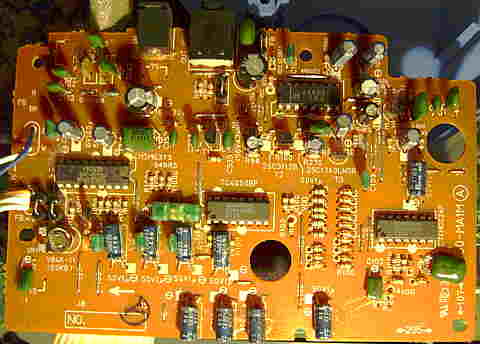
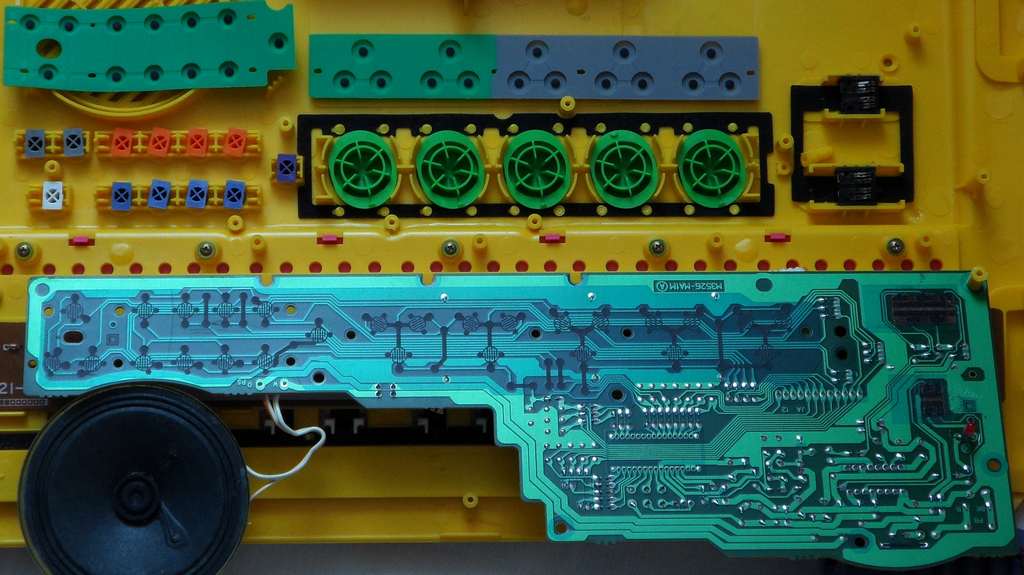
SA-20, here the PCB is double sided with one side mainly used for
copper shielding to reduce EM radiation. It also has 2 additional pulldown
resistor arrays (each 8x 220k) at the matrix lines.
The demos are nice and complex orchestrated although they are quite
short (repeating in a loop) and the tune "Twinkle Twinkle Little Star"
sounds almost like when the programmer forgot to add the main voice because
most of the time plays only the accompaniment and 2nd voice (obligato?);
the melody voice appears only for a few seconds as ringing mandolin. On
the Casio SA-35 this
tune indeed exists complete with main voice and there the main voice can
be muted by hand to train playing.
A new case variant of this instrument was released as Casio SA-45
(aka RadioShack CK-480 | different silver metallic case, same features,
seen on eBay).
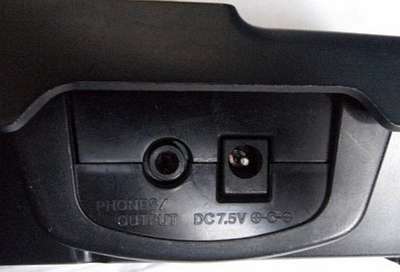
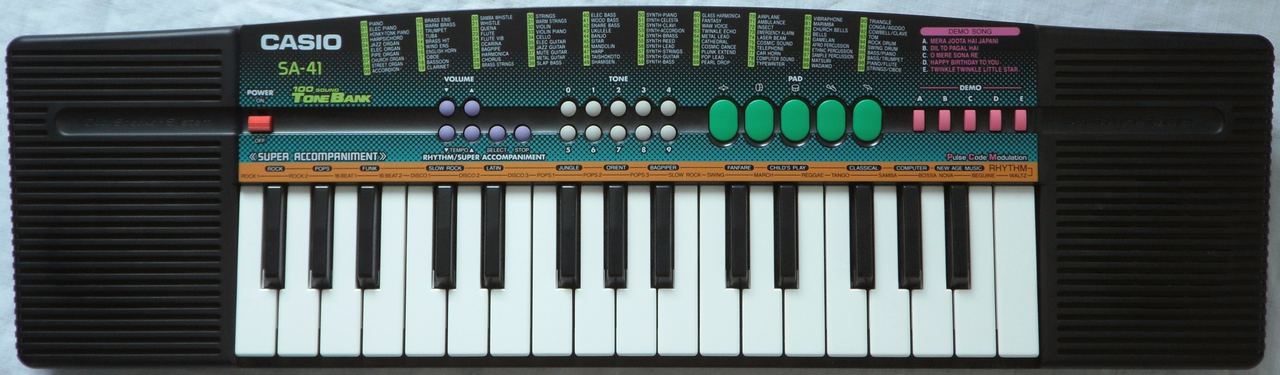
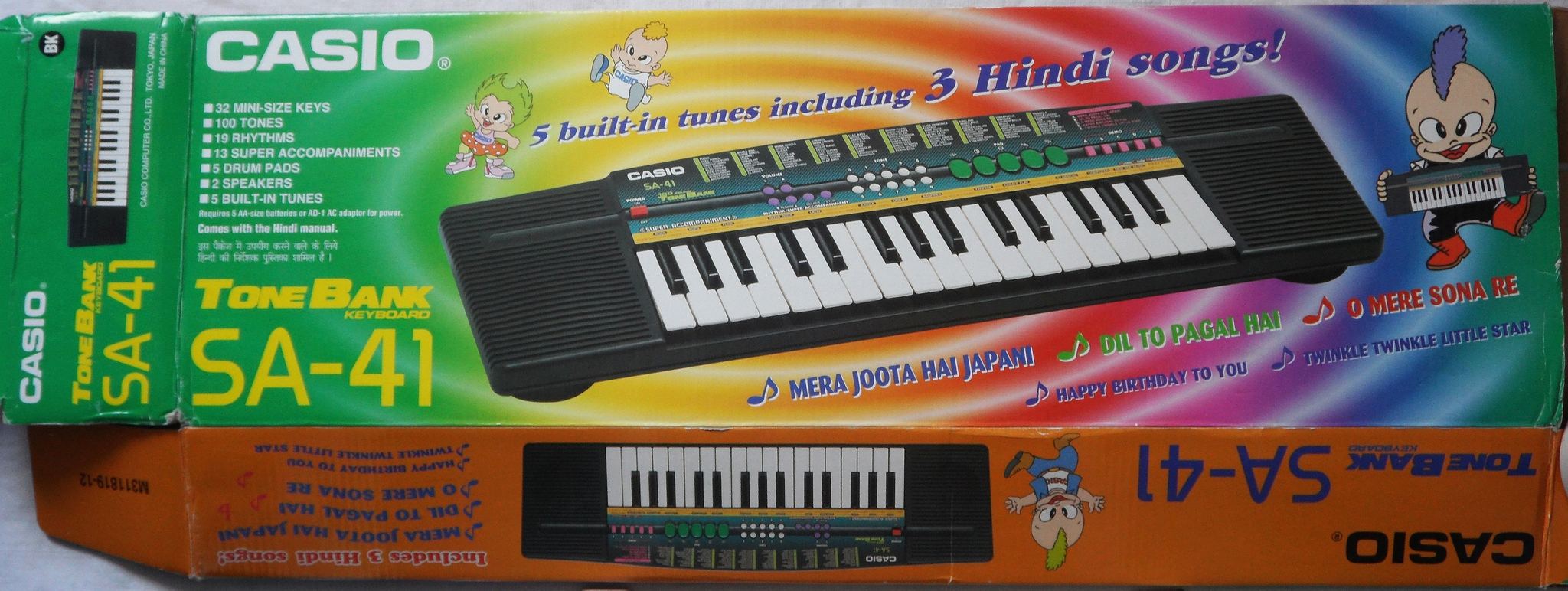
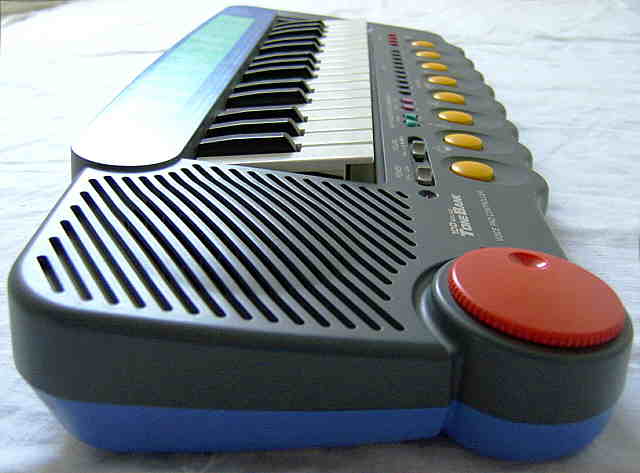
Casio SA-41
This midsize keyboard from 1997(?) came out in India. It is basically a
normal
SA-21, but with changed demos
including 3 nicely arranged Hindi songs.
different main features:
-
CPU= "OKI M6387-31, 6162B01J,
Thai" (30 pin SDIL)
-
different demos (complex orchestrated)
-
Mera Joota Hai Japani [translation: "My Shoes are Japanese"]
-
Dil To Pagal Hai [translation: "The Heart Is Crazy"]
-
O Mere Sona Re
-
Happy Birthday To You
-
Twinkle Twinkle Little Star
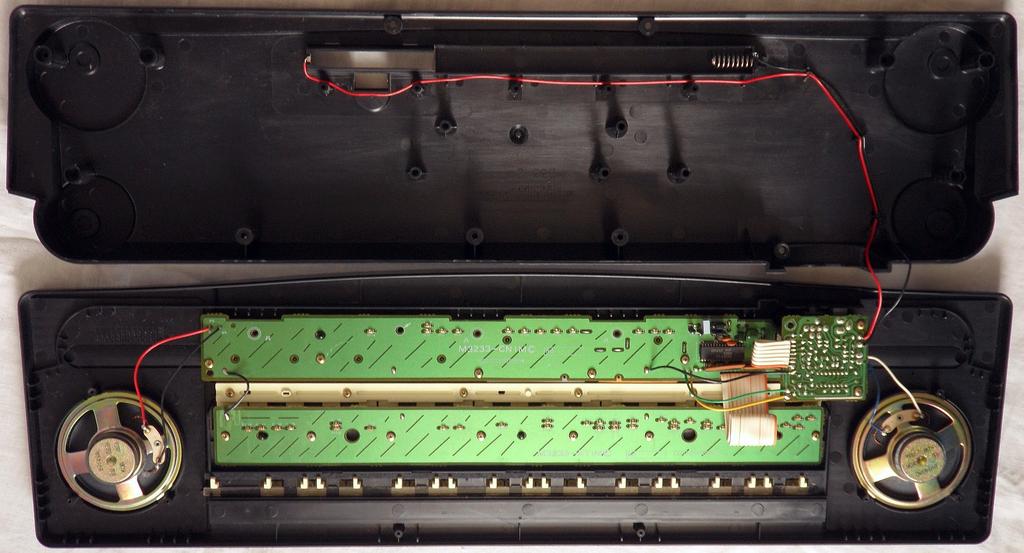
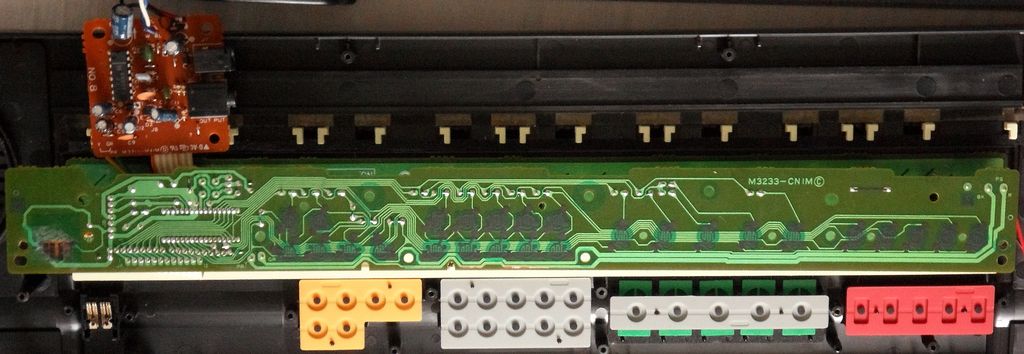
The control panel is printed in funky neon colours and also the hardware
has subtle differences. E.g. the PCB here is single sided (no copper shielding)
and the CPU has a different software number and is made in Thailand (normal
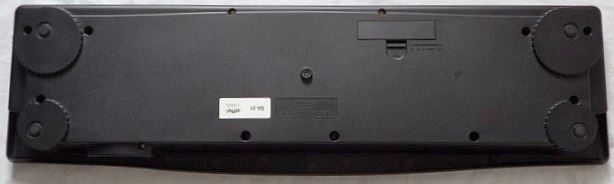
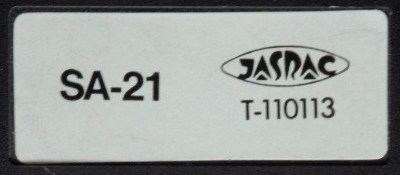
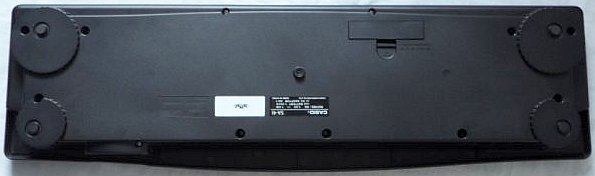
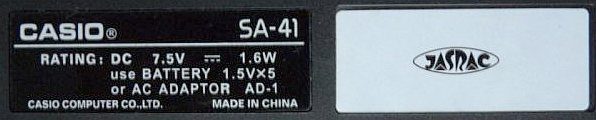
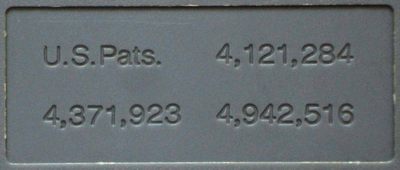
is Japan). On case bottom the "JASRAC" (music copyright) sticker is plain
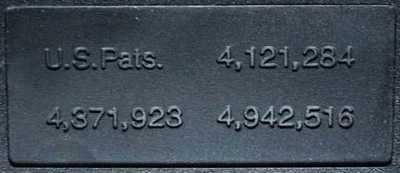
white without number, and next to it is an additional field with embossed
US patent numbers. The rear plastic is shinyer than my normal SA-21. The
embossed case date is 1993, but its newest demo song seems to be from 1997,
so the SA-41 seems to be the latest released classic SA-series
keyboard.
Song A is a quite messy and disharmonic arranged short medley of different
jingles that sounds like from a trashy 1990th Hindi TV series. I read,
in India it is known as a socialist patriotic song against colonialism.
Song B sounds like Chinese dance music (somewhere between tango and disco);
it is the title song of a Bollywood romance movie from 1997. Song C is
a slow and optimistic disco pop tune that sounds like late 1980th platform
videogame highscore music; but also this is a movie theme - of the Bollywood
thriller Teesri Manzil from 1966. Song D and E are like SA-21.
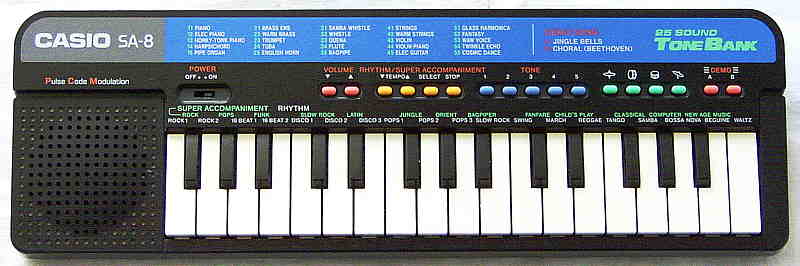
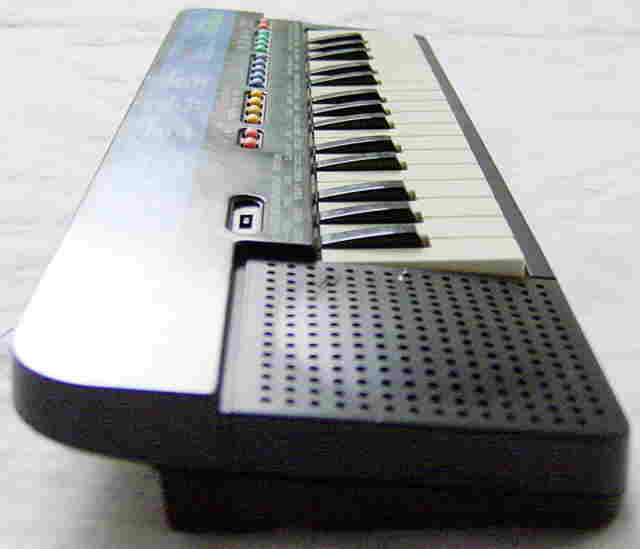
Casio SA-8
This 2 note polyphonic instrument from 1993 (embossed case date) is basically
a crippled Casio SA-21,
so I will only describe the differences. It 2 note polyphonic and has only
25 sounds due to omitted cipher buttons.
It was also released as Casio SA-3 in black, white or green.
It also came out as Realistic Concertmate-370 (seen on YouTube).
different main features:
-
only 25 preset sounds {piano, elec piano, honky- tonk piano, harpsichord,
pipe organ, brass ens, warm brass, trumpet, tuba, english horn, samba whistle,
whistle, quena, flute, bagpipe, strings, warm strings, violin, violin-
piano, elec guitar, glass harmonica, fantasy, waw voice, twinkle echo,
cosmic dance}
-
only 5 cipher buttons
-
no "agogo" drumpad button
-
CPU= "OKI M6387-11, 183536"
(30 pin SDIL)
-
only 2 demo buttons
-
Jingle Bells
-
Choral (Beethoven)
-
no sound output jack
eastereggs:
circuit bending details
Casio released many crippled small keyboards based on Casio
SA-21. Despite same CPU "OKI M6387-11",
they lack many of its features by omitted buttons and keyboard matrix diodes.
This is how to re-enable them. This text deals mainly with Casio SA-8,
but the principle is always the same.
For general info about the SA-series hardware see here.
keyboard matrix
|
11 KI0
|
12 KI1
|
13 KI2
|
14 KI3
|
15 KI4
|
16 KI5
|
17 KI6
|
18 KI7
|
|
CPU pin
|
|
in 0
|
in 1
|
in 2
|
in 3
|
in 4
|
in 5
|
in 6
|
in 7
|
in / out
|
|
o
F3
|
o
F#3
|
o
G3
|
o
G#3
|
o
A3
|
o
A#3
|
o
B3
|
o
C4
|
out 0
|
30 KO0
|
o
C#4
|
o
D4
|
o
D#4
|
o
E4
|
o
F4
|
o
F#4
|
o
G4
|
o
G#4
|
out 1
|
29 KO1
|
o
A4
|
o
A#4
|
o
B5
|
o
C5
|
o
C#5
|
o
D5
|
o
D#5
|
o
E5
|
out 2
|
28 KO2
|
o
F5
|
o
F#5
|
o
G5
|
o
G#5
|
o
A5
|
o
A#5
|
o
B5
|
o
C6
|
out 3
|
27 KO3
|
|
'0'
|
'1'
|
'2'
|
'3'
|
'4'
|
tempo
+
|
volume
+
|
rhythm select
|
out 4
|
26 KO4
|
|
'5'
|
'6'
|
'7'
|
'8'
|
'9'
|
stop
|
tempo
-
|
volume
-
|
out 5
|
25 KO5
|
P.
base
|
P.
snare
|
P.
hihat
|
D.
'E'
|
D.
'D'
|
D.
'C'
|
D.
'B'
|
D.
'A'
|
out 6
|
24 KO6
|
P.
cymbal
|
P.
agogo
|
-
|
-
|
-
|
-
|
-
|
polyphony 4
[diode]
|
out 7
|
23 KO7
|
All button names were taken from the original Casio
SA-21. Unknown function names and in/ out numbers in this chart
were chosen by me. The input lines are active-high, i.e. react on +Vs.
Any functions can be triggered by a non- locking switch in series to a
diode from one "out" to one "in" pin. The SA-21 additionally has 2 pulldown
resistor arrays (each 8x 220k) at the matrix lines (likely against EM interferences
or capacitance problems).
legend:
|
|
|
"o"
|
= keyboard key |
|
P.
|
= drumpad |
|
D.
|
= demo songs |
orange
background |
= easteregg (in SA-8 unconnected feature) |
The matrix layout of the M6387-11 CPU is designed in such a way that
it would (beside different demo) also work as a replacement for the M6387-01
in the SA-1 and SA-20.
In SA-20 possibly the connection between pin 23 and 18 (see "upgrade polyphony")
would need to be replaced with a diode to avoid collision with the 'cymbal'
and 'agogo' drumpads. The original M6387-01 matrix is almost the same,
except that row KO6 contains only doublets of the cipher buttons '0'..'4'
and 3 doublets of the 'demo' button; row KO7 is unused.
eastereggs:
The only 5 available cipher buttons {'1', '2', '3', '4', '5'} of the
Casio
SA-8 correspond to the buttons {'0', '1', '2', '3', '6'} on the SA-21.
It is very recommended to add also the 5 missing buttons to get access
to the 75 missing preset sounds buried in its CPU. The 2 demo buttons {'A',
'B'} correspond to {'E', 'A'} on SA-21.
upgrade polyphony:
Technically it is possible to upgrade the SA-8 with the 4 note polyphony
of SA-21. To activate higher polyphony, connect a diode from pin 23 to
pin 18 of the CPU (permanently or only at boot time). However to prevent
polyphony bugs, a diode needs to be wired in series with each key (from
an output to an input); soldering 32 tiny matrix diodes to the flimsy multi-layer
PCB is not really worth the effort unless you have a special reason to
do so. |
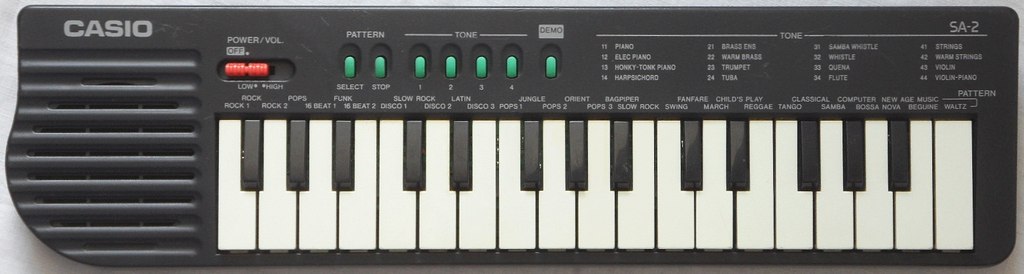
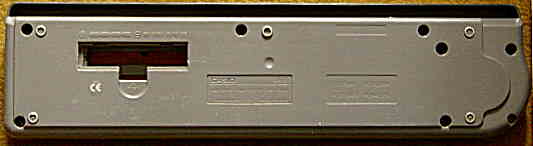
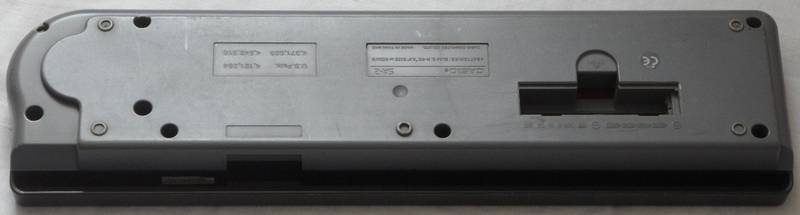
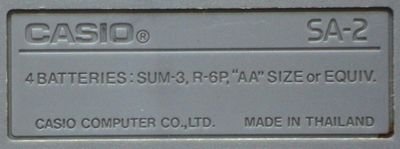
Casio SA-2
This lousy little tablehooter from 1995 (embossed case date) is an even
more crippled version of the Casio SA-8.
It has no(!) tempo control, only 2 volume steps, only 16 preset sounds
(due to 4 cipher buttons) and no drumpads anymore. A red version of it
was released in 1995 as Casio KA-2. A violet version came out in
the CasioClub series as M-80.
(Don't confuse the SA-2 with the similar looking Casio
SA-5, which is way more versatile and has fantastic tekkno synth
sounds.)
different main features:
only 16 preset sounds {piano, elec piano, honky- tonk piano, harpsichord,
brass ens, warm brass, trumpet, tuba, samba whistle, whistle, quena, flute,
strings, warm strings, violin, violin- piano}
only 4 cipher buttons
no tempo control
only 2 step volume slider
no drumpad buttons
CPU= "OKI M6387-11, 5092301"
(30 pin SDIL)
only 1 demo: "Choral (Beethoven)" [="Ode to Joy"]
no sound output jack
eastereggs:
Very annoying is that this horrible crippled tablehooter has only a mechanical
switch for 2 volume steps despite its CPU would support digital volume
control. Also the omitted tempo buttons are inexcusable. The SA-2
is certainly good for circuit bending (all the missing stuff can be added
by matrix eastereggs, see Casio SA-8),
but for not much else. (I would never have bought one of these but found
mine in a junk pile after a flea market.)
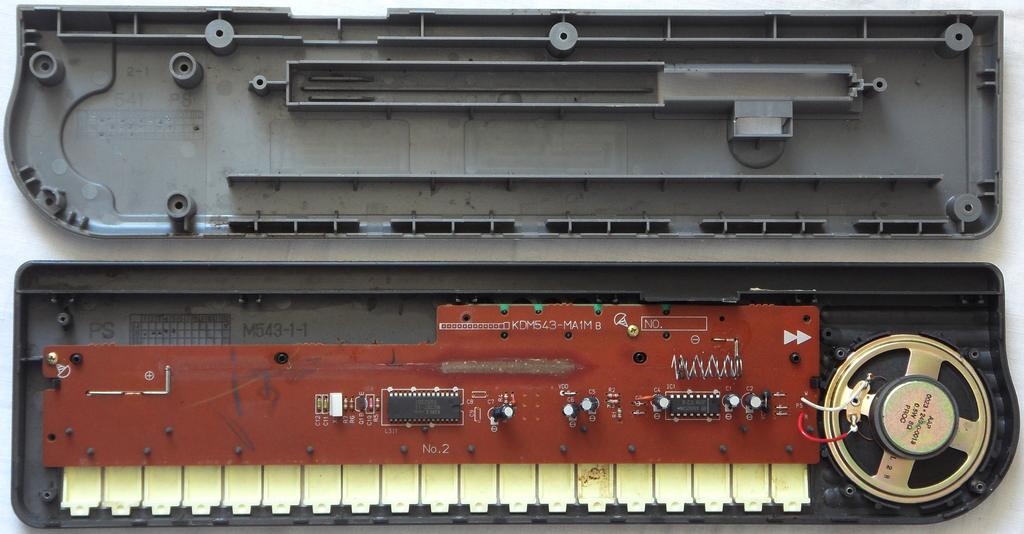
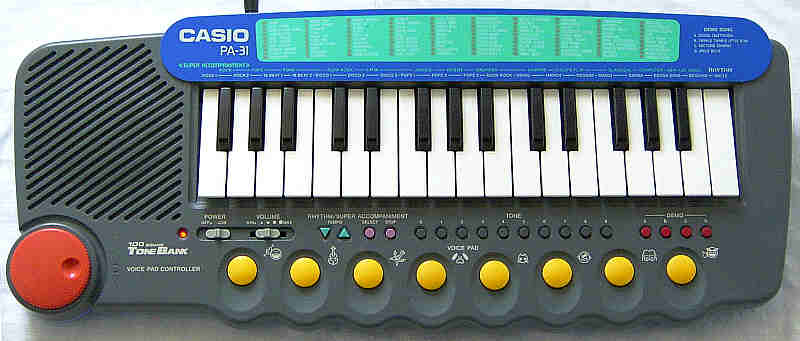
Casio PA-31

Unlike Casio SA-1, this
instrument is 4 note polyphonic, has higher tone quality and 4 demo melodies.
Unfortunately the digital volume control is gone, which on the SA-1 could
be used as a sound effect to change the sample bit resolution and the speed
of algorithmic preset sounds (e.g. mandolin ring).
The special feature of the Casio PA-31 in comparison to other such
keyboards is the so-called "voice pad controller", which is simply a set
of 8 sound effect buttons those play each a fixed low resolution sample
(like drumpads), which pitch can be adjusted with a knob within a bit more
than 1 octave.
different main features:
-
32 midsize keys
-
built-in speaker (ca. 8cm, less harsh)
-
main voice polyphony 4 notes (only 3 with accompaniment)
-
volume slide switch (5 steps) instead of digital volume control
-
8 OBS effect sample pads {"hello!", slap bass(?), heavy metal guitar, dog,
cat, "dah!"- voice (child), "deh!"- chorus, "hi!"} with pitch knob (>1
octave)
-
multi-chip hardware:
-
main CPU= "OKI M6387-11,
253523" (30 pin SDIL)
-
effect pads sound IC= "OKI M6373-349,
2232351" (18 pin DIL)
-
4 demo melodies
-
Choral (Beethoven) [= "Ode to Joy"]
-
Twinkle Twinkle Little Star [very faint main voice]
-
Nocturne (Chopin)
-
Jingle Bells
eastereggs:
-
5 drumpads, "Happy Birthday" demo and digital volume control addable (see
SA-8).
notes:
All sounds of this instrument sound cleaner and less harsh than Casio
SA-1. I am not sure if the output DAC bit resolution is somehow
increased by external discrete components (demultiplexer?), but I think
it is just better filtered and not reduced by a digital volume control.
The "voice pad controller" is implemented by the independent sound IC
"OKI M6373-349", which clock speed can be adjusted with the big red knob
to change the pitch. Unfortunately the effect pads respond too slow for
fast trilled sounds and have only a monophonic sound generator. The low-res
effect samples sound quite noisy but not harsh. (I haven't examined the
hardware yet.)
A variant with ROM-Pack, key lighting leds and voice changer (hardware
class PT-88) came out as Casio
PA-81.
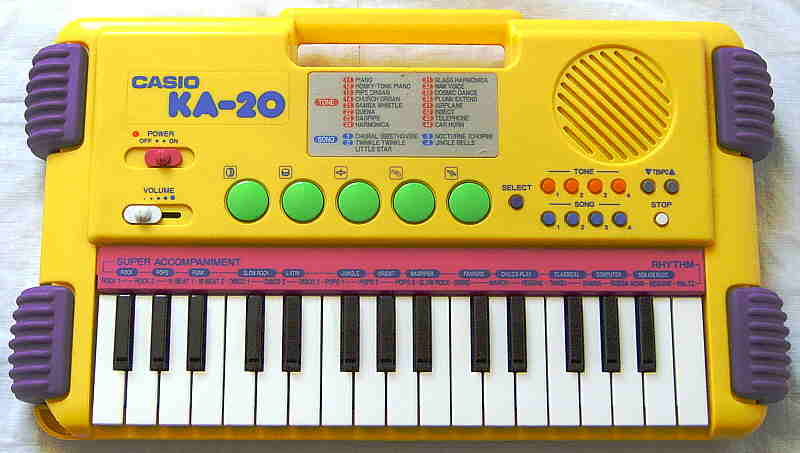
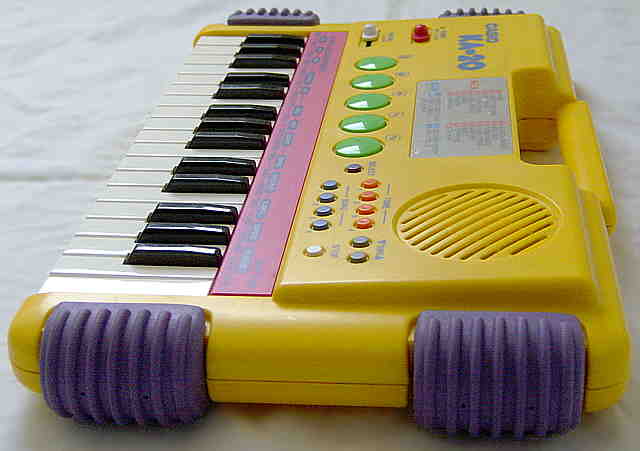
Casio KA-20
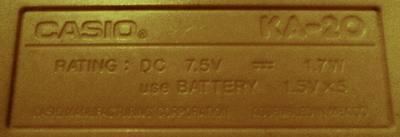
This quite rare yellow toy keyboard from 1993 (embossed case date) was
apparently the model for the widely spread and greatly bizarre sounding
My
Music Center, because it has many design elements and even some
sounds common with it.
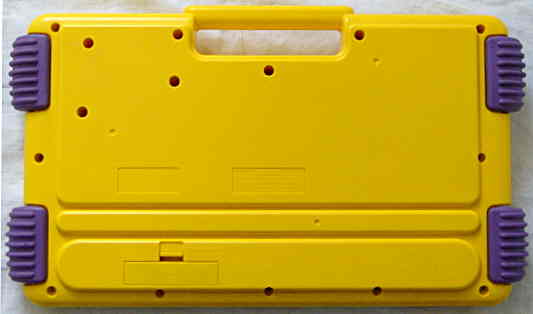
Both have a case with moulded handle opening at the top, 32 keys, 5 drumpad
buttons and 4 edge protectors, although My Music Center is typically
red with yellow plastic protectors while the violet protectors on KA-20
are of rubber. The percussion timbres of
My Music Center sound even
like low- res samples of the latter, both include a honky- tonk piano sound
and multiple demo tunes, and also the arrangement of the wonderful "Jingle
Bells" demo has noticeable similarities with the
Casio model (regard
the trilled notes) although they are not identical. The My Music Center
is also much smaller and has mini keys while
KA-20 has a midsize
keyboard. An even closer case imitation of it was the Sun
Ta Toys SDN BHD 1996, although its "Jingle Bells" is arranged differently.
Unlike the tinny My Music Center, the sounds of Casio KA-20
are surprisingly clear and even the speaker sounds pleasantly warm and
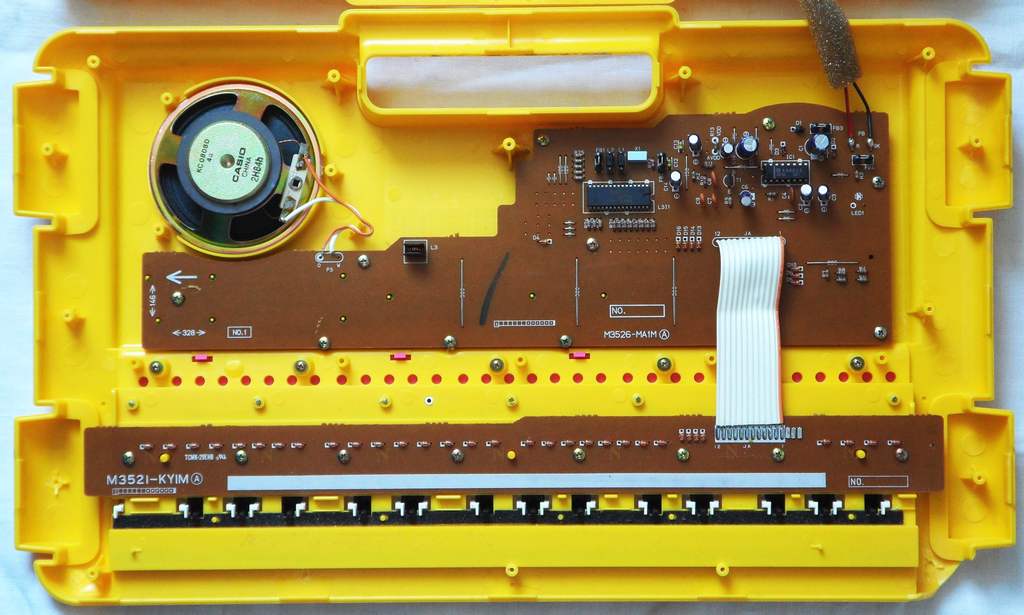
has some bass. The KA-20 uses the same CPU like the Casio
SA-21, but has only 16 sounds due to omitted cipher buttons. These
are the differences to SA-21.
different main features:
-
built-in nice speaker (sounds surprisingly warm and clear)
-
only 16 preset sounds {piano, honky- tonk piano, pipe organ, church organ,
samba whistle, quena, bagpipe, harmonica, glass harmonica, waw voice, cosmic
dance, plunk extend, airplane, insect, telephone, car horn}
-
only 4 cipher buttons
-
volume slide switch (5 steps) instead of digital volume control
-
CPU= "OKI M6387-11, 3162352,
Japan" (30 pin SDIL)
-
no jacks
eastereggs:
-
6 additional cipher buttons addable (to select all 100 preset sounds, see
SA-8).
notes:
The only 4 available cipher buttons {"1", "2", "3", "4"} of the Casio
KA-20 correspond to the buttons {"0", "2", "6", "7} on SA-1or SA-21
hardware. It is very recommended to add also the 6 missing buttons to get
access to the 84 missing preset sounds buried in its CPU. (I didn't modify
mine because I already own complete variants.) Bizarre is that in the case
bottom is a crossed out embossed date table of 1991..93 and (like in its
top) a new one from 1993..96.
Under the key top cover is an unused row of key LED holes, because in
1990 a red keyboard with same case, key lighting (LED row) and ROM-Pack
slot instead of the preset sound list was released as Casio - Sound
Kids 02 (Casio KS-02). It has
8 OBS preset sounds {piano, harpsichord, violin, organ, flute, clarinet,
trumpet, vibraphone}, no rhythms and its 5 drumpads can be switched to
effect sounds. Technically it is a relative of PT-88.
Casio TA-10
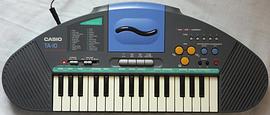
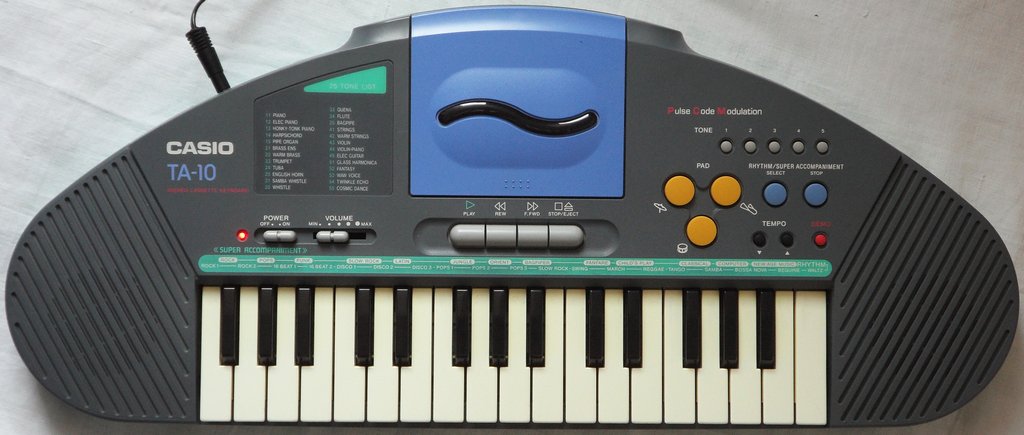
This is basically a midsize Casio SA-8
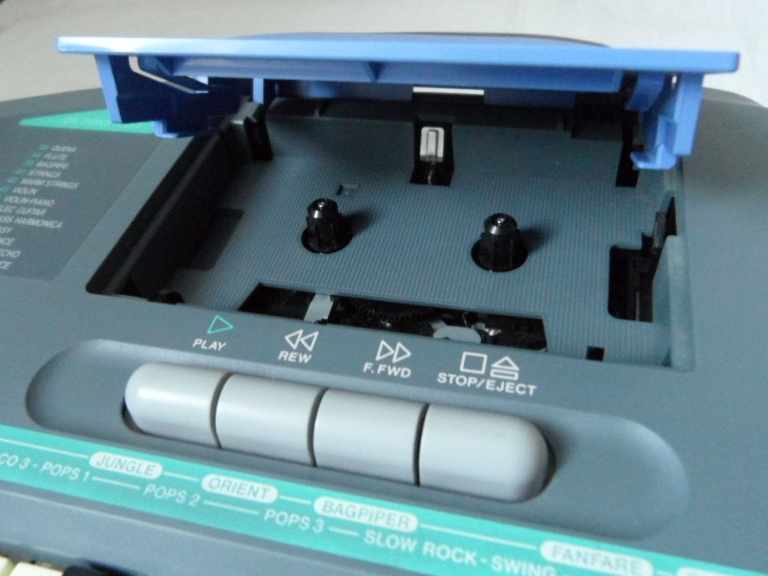
with built-in stereo cassette player. This is not a cassette recorder despite
there is a microphone for singing, and despite midsize keys it is only
2 note polyphonic.
different main features:
-
32 midsize keys
-
2 speakers (10cm, keyboard is mono, cassette plays stereo)
-
polyphony 2 notes
-
analogue volume slider (instead of +/- buttons)
-
only 3 drumpad buttons {hihat, agogo, base}
-
only 1 demo button ("Twinkle Twinkle Little Star")
-
built-in stereo cassette player (no recorder)
-
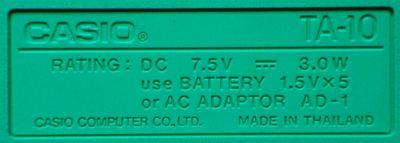
jacks for AC-adapter & microphone
notes:
This keyboard came with the German audio cassette "Mein Casio TA-10
Keyboard - probieren, spielen, lernen". With my specimen the cassette
sounds detuned against the keyboard and plays a little higher; likely the
cheap plastic tape drive runs a bit too fast. The first cassette side musically
explains the functions of the keyboard. Then the player shall accompany
an imaginary eerie movie scene with the "fantasy" sound. On side
2 there are 6 German children songs. First it plays a complete version,
then followed by only the accompaniment to play to.
The 6 children songs are:
-
Alle meine Entchen (="All My Ducks")
-
H?nschen Klein (="Little Bee")
-
Es tanzt ein Bi-Ba-Butzemann
-
Meister Jakob (="Brother John")
-
Vogelhochzeit
-
Guten Abend, Gute Nacht (= Brahms lullaby)
The songs are nice polyphonic arrangements and were likely played on one
of the professional Casio workstation keyboards with its automatic accompaniment.
Another member of this hardware class was the oval mini keyboard
Casio
SA-6 (100 sounds, 5 drumpads).
| removal
of these screws voids warranty... |
|
|
 |

|
|
| |
back
|
|