|
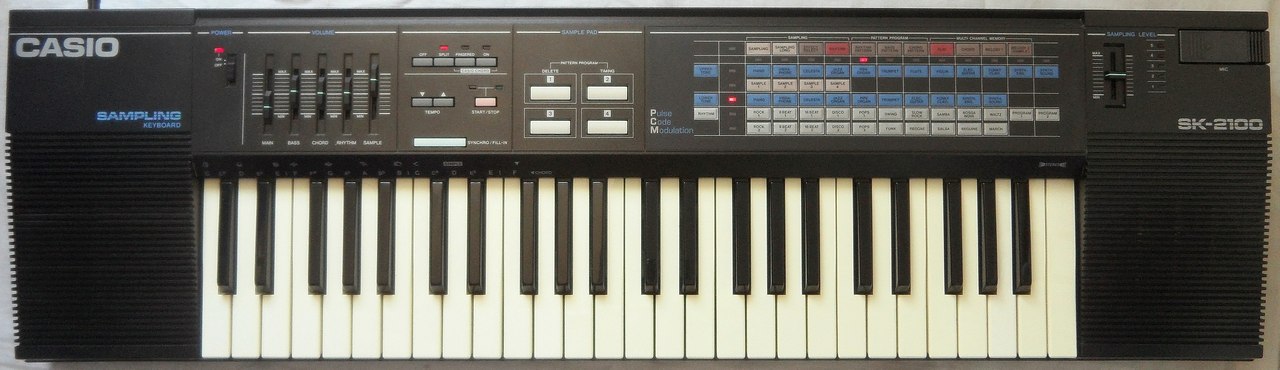
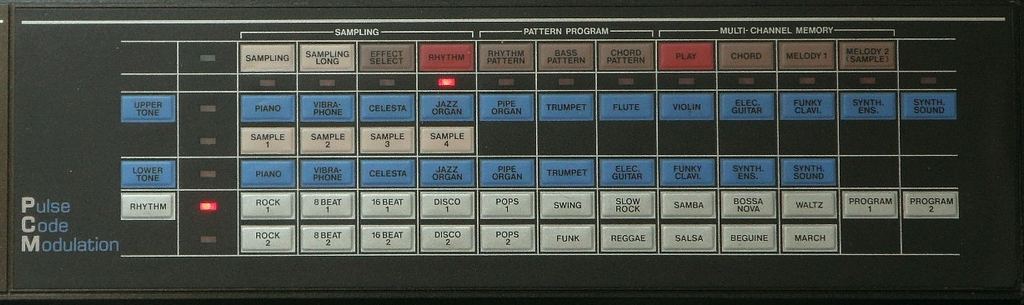
The SK-200 variants were Casio's late ambition of following the foil keypad hype of early 1980th - a trend that became popular with Yamaha DX7 and adapted by the visionary Casiotone CT-6000, but soon was abandoned because it made musical instruments less intuitive and hard to use without staring at the panel - a nuisance that nowadays returned with the touchscreen craze (that can end deadly when part of automobiles). The foil buttons of Casio at least are a little raised and have tactile dome switches underneath to mitigate the trouble.
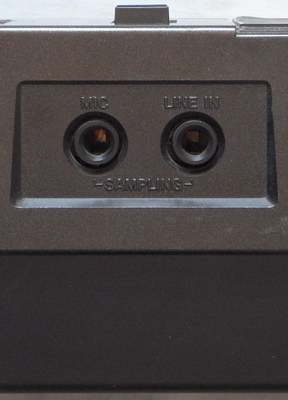
The sampler can store up to 4 short samples and can not be used on full keyboard length but only for either the lower (chord) or upper (melody) section or replace drum samples of the rhythm. The stairwave sound engine uses a variant of the low-end consonant-vowel chip found in MT-88. The accompaniment has a bass with simple staccato chord patterns. At least the chord preset sound is selectable. There is also a sequencer and programmable rhythm pattern with accompaniment.
 |
 |
 |
 |
 |
 |
The sampling microphone of SK-2100 is detachable on a spiral cable and
even has volume control with LED bargraph to avoid distortion.
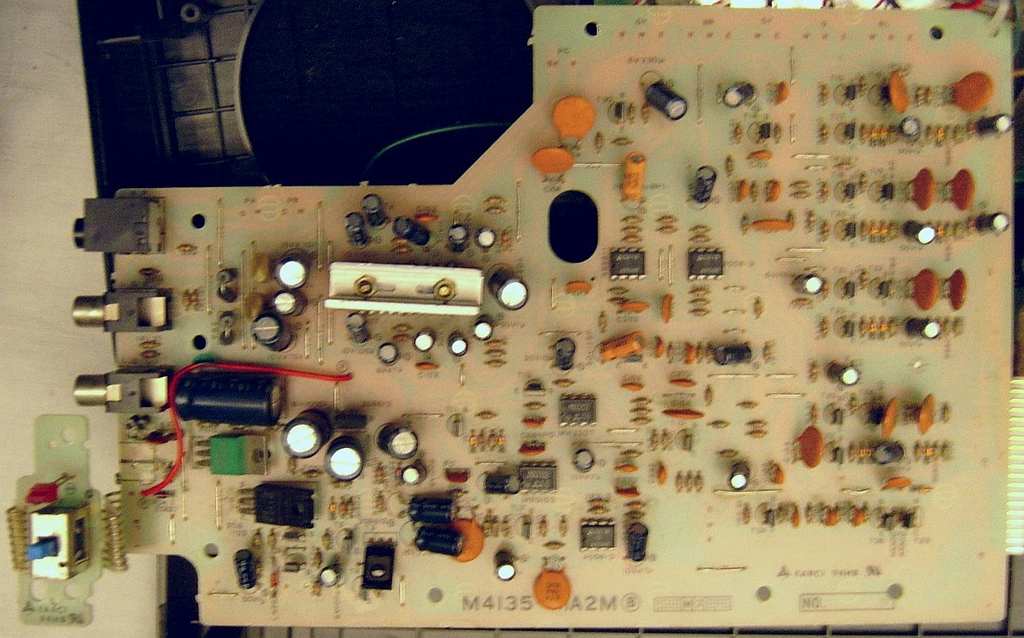
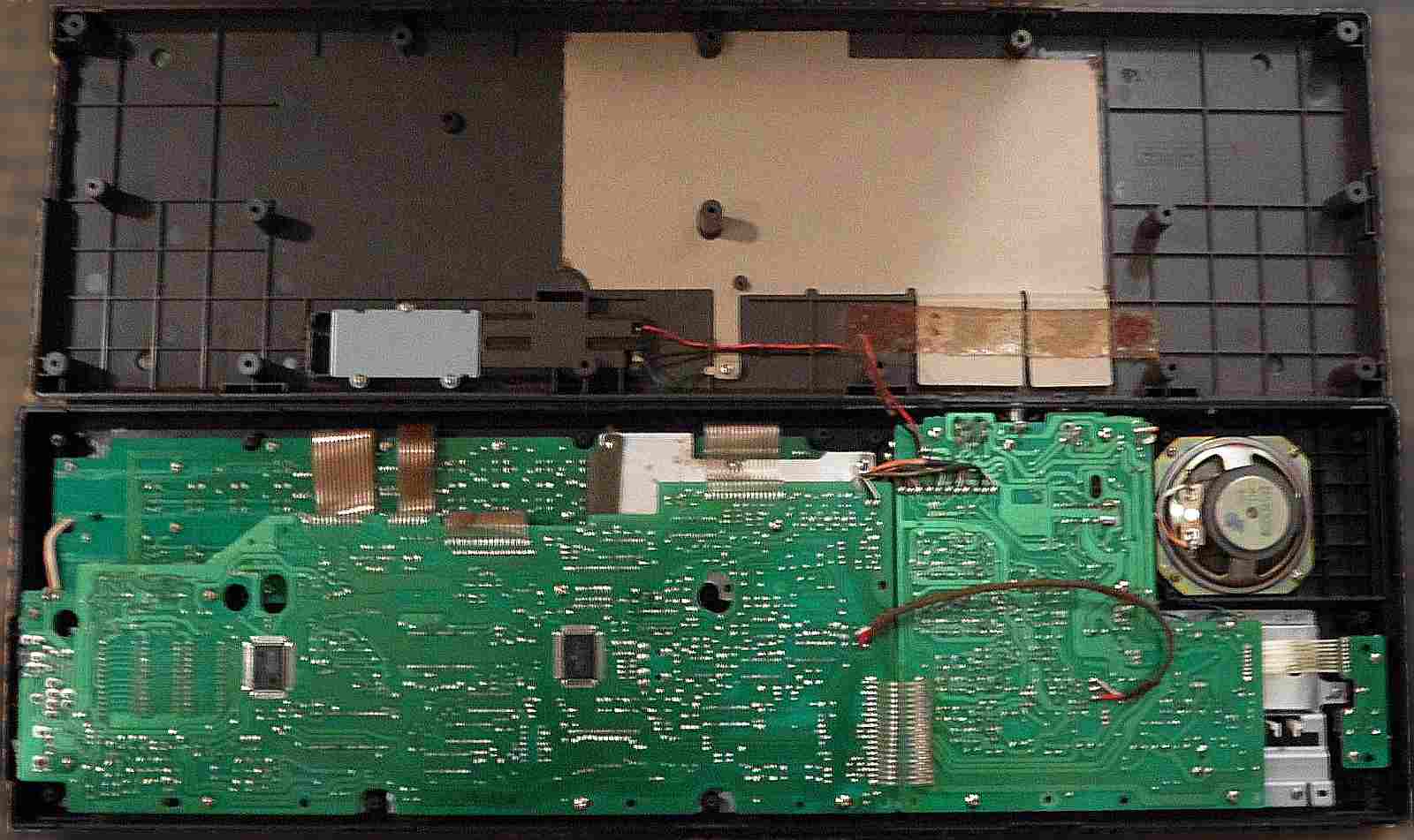
hardware detailsThe Casio SK-200 (and SK-2100) contains complex multi-chip hardware with much analogue stuff. It is built around the main CPU HD61702A04 that produces stairwave sounds and controls the sampling CPU M6283-02 which controls the percussion IC M6294-03.
The common RAM uPD4464C-15C stores sequencer data and has a system exclusive area shared between both CPUs. The sampling RAM HMS-6225SLP-15 stores the samples. The sampling ROM uPD23C256EAC-012 contains preset samples, percussion data and envelope data for sampled sounds. Like in other SK-instruments, the sampling CPU needs 4 external VCAs for analogue envelopes. But because one channel is hardwired for bass, sample playback here is only 3-note polyphonic (even when bass is not in use). The sampling CPU M6283-02 has an interesting model select function. According to service manuals, in SK-100 its input pin 84 is wired to ground, while in SK-2100 it is connected to its output pin 61. Likely this sets the installed amount of RAM and count of samples (SK-100 = 16KB for 2 samples, SK-2100 = 32KB for 4 samples). The stereo chorus is a phase shifting delay circuit with plenty of analogue stuff, using a 1024 steps BBD IC MN3207 clocked by IC MN3202. Its LFO has 1.25Hz. The upper and lower main voice preset sounds are routed through each
a fixed low-pass filter, which cutoff frequency and gain is switched by
the CPU. The lines F1..F4 are latched by a 75HC175 from CPU pins KO1..KO4
during rising edge of pin FC7. Lines F5..F8 are latched the same way during
rising edge of FC6. (In this table "X" means hi.) In schematics both filters
are identical beside that upper melody has an additional 470k pullup resistor
before the 33k output resistor.
In Casio SK-100 hardware the lower melody filter is simplified because its preset sound or chord stays always 'piano' and so has no latches for different modes. keyboard matrixThe keyboard matrix is polled only by the main CPU. Although there is much demux going on, at least the matrix looks less insane than in MT-800. The main CPU uses its address-/databus and some other lines (including KI8, LO8) to control the sampling CPU. The LEDs are latched in 2x 74HC174 from pins KO1..KO12 during rising edge of a clock pulse on pin LO11, with LEDs wired against inverted LO12, LO13. The tempo LEDs are controlled by pins FC1, FC2 directly. The sampling level indicator LEDs of SK-2100 are not part of the matrix but controlled by an IC LB1403N.This matrix is based on SK-2100 service manual. I didn't analyze it
by myself, so there may be still hidden eastereggs.
The input lines are active-high, i.e. react on +Vs. Any functions can
be triggered by a non- locking switch in series to a diode from one "out"
to one "in" pin.
During sampling, the CPU transmits data directly to the RAM and therefore disables key common signals KO0..KO9 which makes the keys inactive. Interesting is that the same strange slave CPU architecture was also used in a sampling keyboard by Yamaha, namely the VSS-200, which main CPU XD716A0 handles the longer keyboard and high polyphony non-sampling (FM) preset sounds, but controls a whole VSS-30 CPU YM2416B for sampling (which there can even resample the FM for adding synth effects). |
||||||||||||||||||||||||||||||||||||||||||||||||||||||||||||||||||||||||||||||||||||||||||||||||||||||||||||||||||||||||||||||||||||||||||||||||||||||||||||||||||||||||||||||||||||||||||||||||||||||||||||||||||||||||||||||||||||||||||||||||||||||||||||||||||||||||||||||||||||||||||||||||||||||||||||||||||||||||||||||||||||||||||||||||||||||||
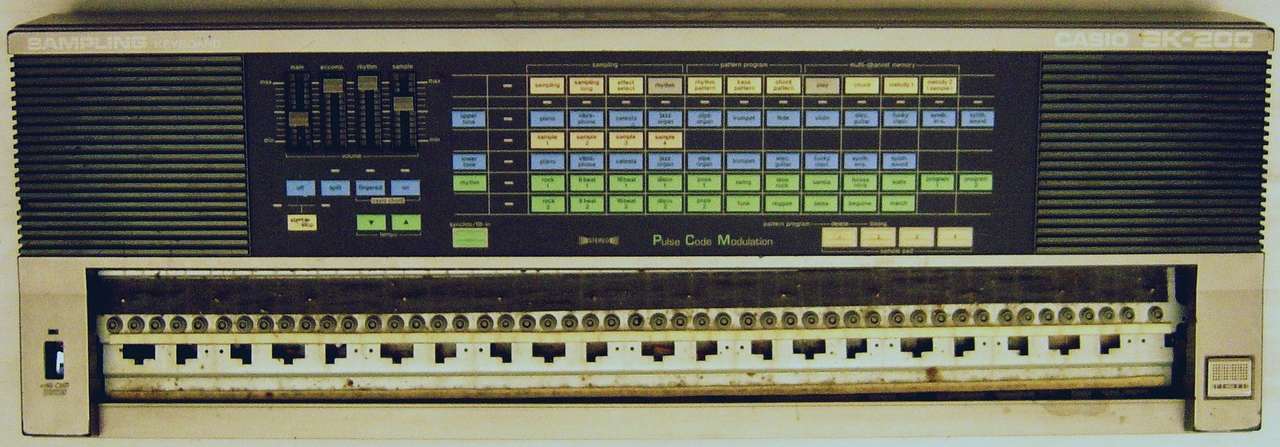
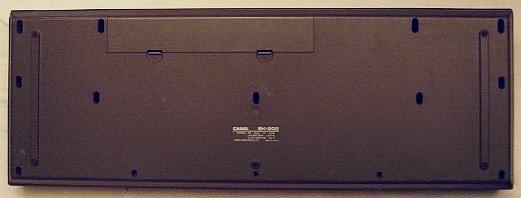
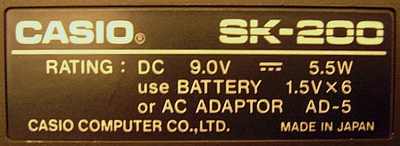
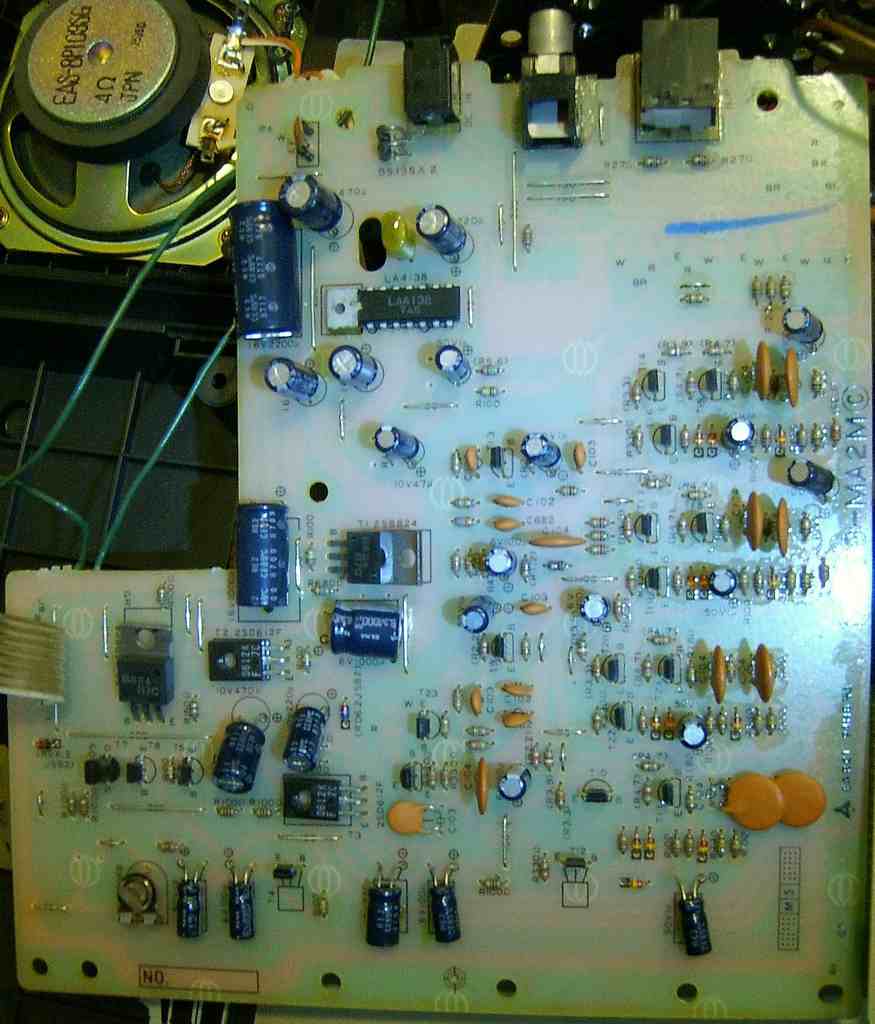
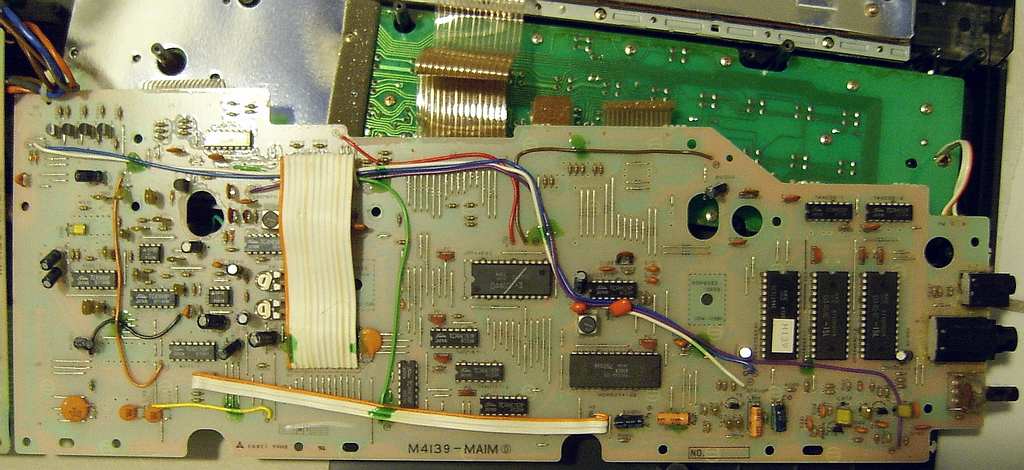
My SK-200 is an incomplete wreck. See Casio SK-2100 for features and hardware.
 |
 |
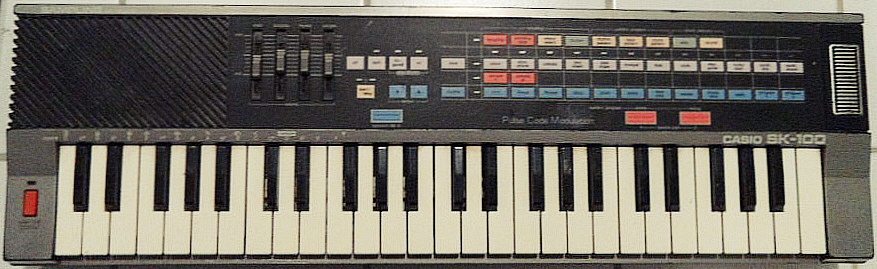
My SK-100 specimen is braindead, so I can't test it.
 |
 |
 |
 |
 |
 |
 |
 |
 |
 |
 |
| removal of these screws voids warranty... | ||
 |
 |
|
|
|