Casio SK-5, PT-280 |
small keyboard with lo-fi sampling, ROM-Pack & key lighting |
|
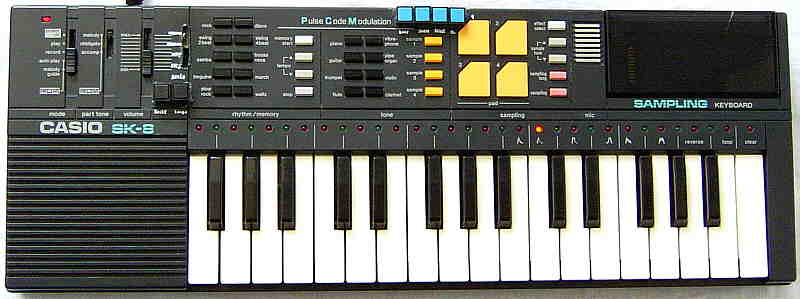
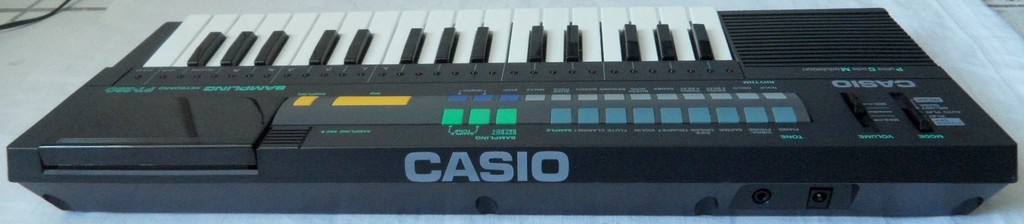
In opposite to the SK-1 it includes a "melody guide" key lighting feature for music teaching (not the keys itself light up but a row of small LEDs above them) and a ROM-Pack music cartridge slot. Unfortunately this instrument is missing the nice drawbar synthesizer and portamento of the SK-1, and the tekkno blip drums were replaced by ordinary percussion samples without accompaniment. Also the sequencer is way simpler than on SK-1. This instrument was also released as Realistic Concertmate-800.
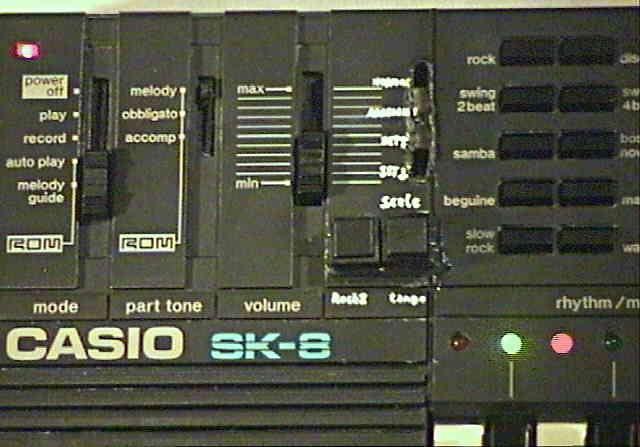
By a keyboard matrix easteregg the SK-8 can be easily modified into an oriental keyboard.
 |
 |
The main voice sounds are based on medium resolution samples and sound quite natural. They sound much like the SK-1, but unfortunately the "human voice", "brass ensemble" and "synth. drums" of the latter are missing. The "trumpet" sound apparently produces an artificial wind noise during its attack phase by a rapidly stuttering zipper noise envelope. "trumpet" and "violin" employ a quite slow (square?) vibrato with about 5Hz. The "pipe organ" resembles a metal pipe organ rank. The OBS sound buttons mute any held notes, which prevents some play tricks. Unlike the SK-1, the SK-8 has no synthesizer anymore and also the selectable envelopes only work with the user samples.
The sampler can store up to 4 short low resolution samples or combine either sample memory 1+2 or 3+4 to double the length. The "reverse" effect takes some seconds (indicated by knocking metronome and cymbal) computing time. A bit strange is that the 2 pink sample recording buttons are of rubber, while all other buttons are of plastic despite all have the same shape. Possibly the designer intended to make them feel differently to avoid accidental overwriting samples currently kept in the RAM.
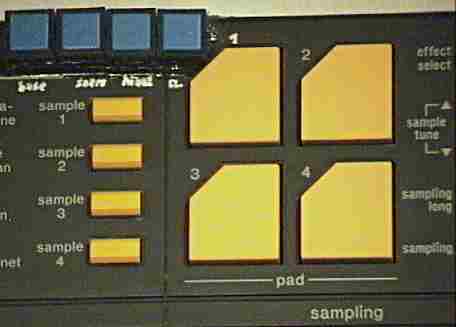
The rhythms are based on rather low resolution samples, those knock clean and impulse and (unlike e.g. My Music Center) don't contain disturbing static noise. Only the "clap" sounds dull and too short. Unlike the great electronic blip rhythms of Casio SK-1, the SK-8 has no accompaniment anymore. Unfortunately the 4 rubber sample pads can not be used as drumpads with the internal percussion; when the memory contains no samples, they instead simply play an "A" note on the preset sounds {piano, vibraphone, guitar, pipe organ}.
Unlike other Casio ROM-Pack keyboards, the "melody guide" key lighting feature (see e.g. Casio PT-82) of the SK-8 has no different levels, but always plays with lit LEDs and waiting. Special is here that with ROM-Pack musics not only the sound of the main voice, but also of the obligato (2nd voice) and accompaniment can be selected by the user. Possibly this feature was added because the SK-8 has a slightly different sound set than other ROM-Pack keyboards.
The sequencer can record all played sounds (polyphonic), sound changes and rhythms, but it can not be edited. (The SK-1 had a way more complex sequencer with 3 monophonic tracks.) To record a sequence, set the mode switch to "record" and press "memory start". So far no rhythm is running, it will play a metronome now. You can now play your sequence. Also preset sound and rhythm changes will be recorded. To finish, press "start/ stop" or set the mode switch back to "play" mode. To play your sequence, press "memory start" in "play" mode. It will now play the sequence in a loop; you can even play another voice (but no rhythm) to it on the keyboard and you can retrigger the running sequence at any time with "memory start" or change the tempo. To stop it, press "start/ stop".
As far I remember well, my SK-8 came with the ROM-Pack RO-555
"Home Melodies".
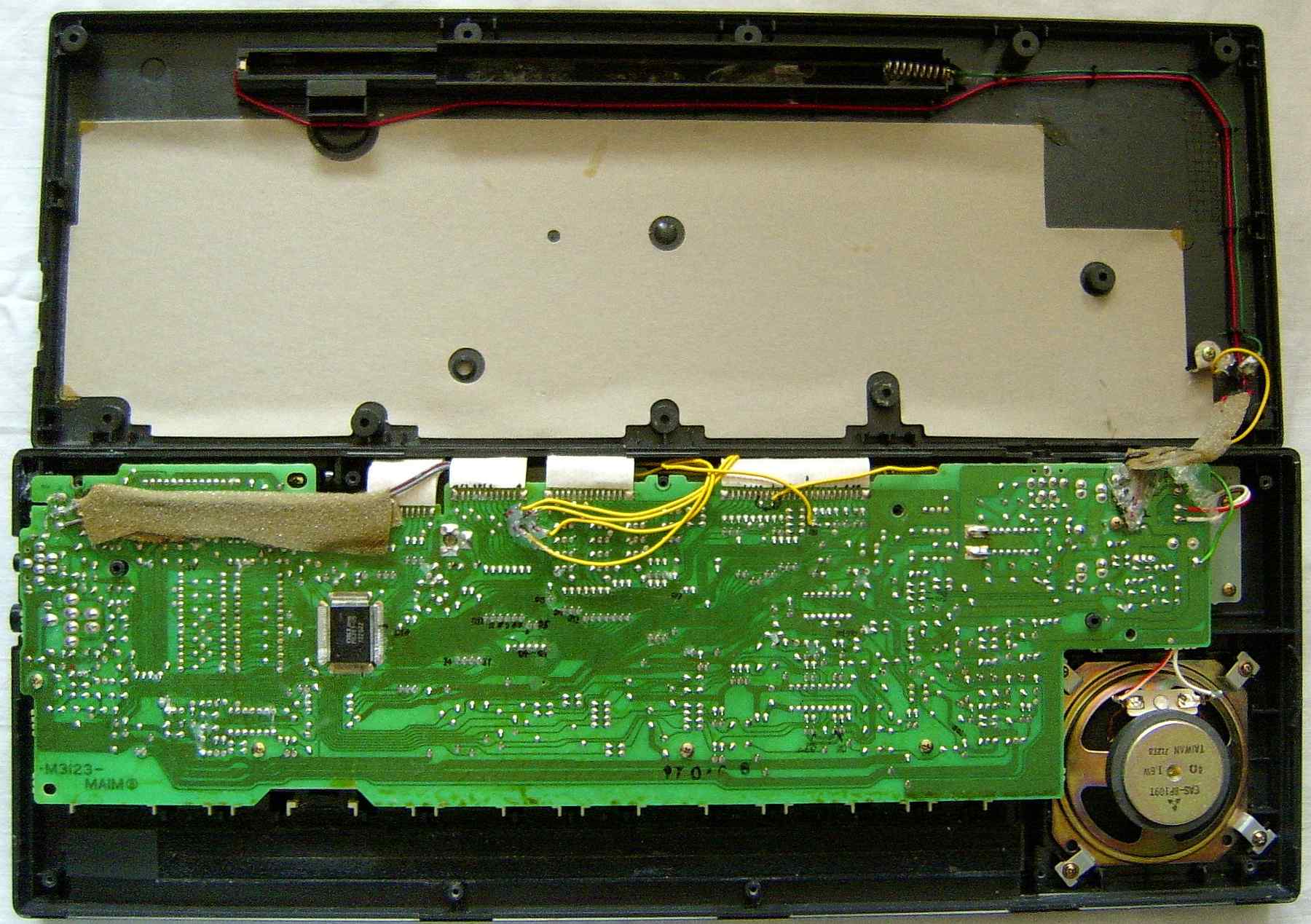
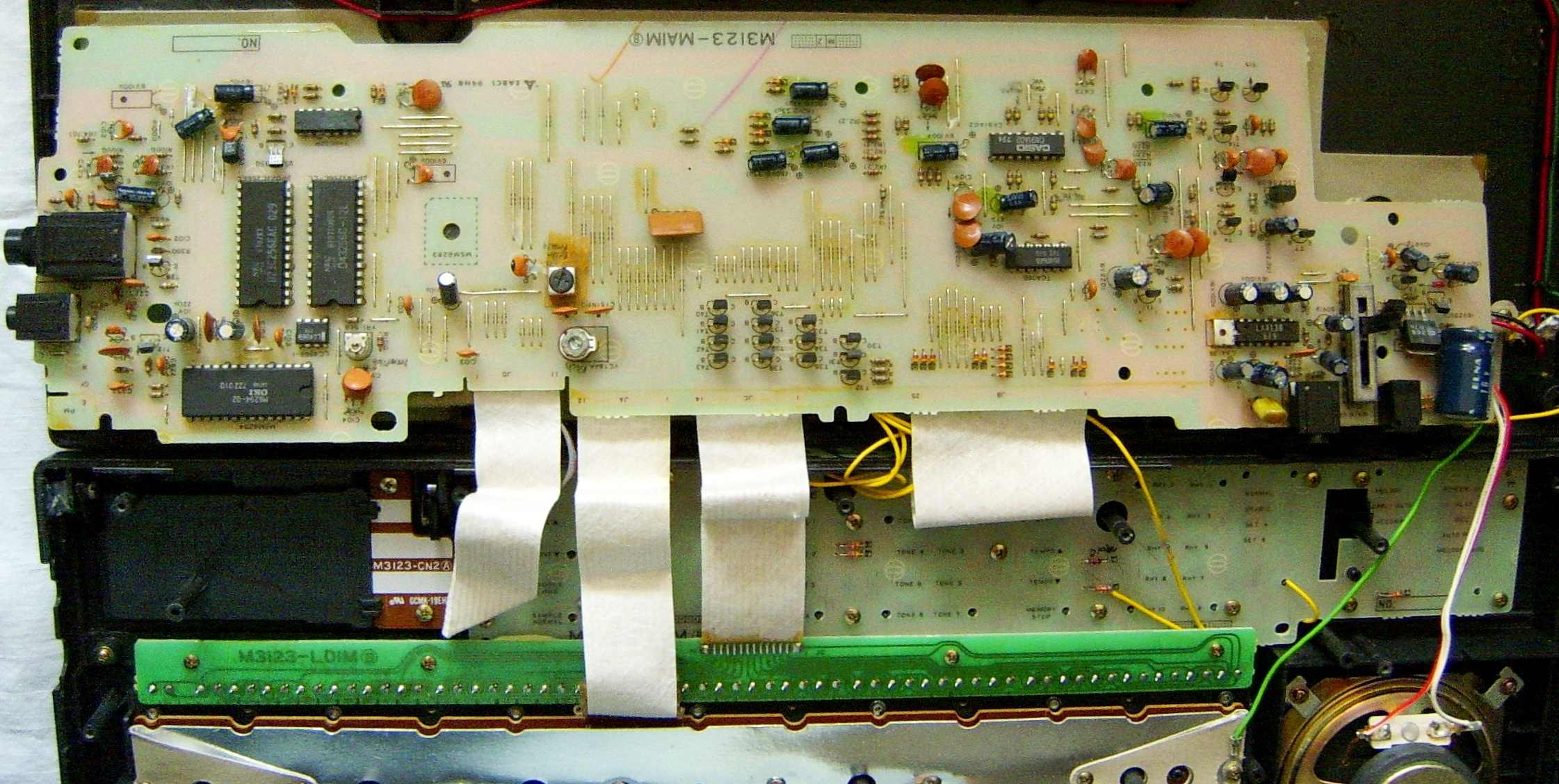
circuit bending detailsThe Casio SK-8 is based on the CPU "OKI M6283-05" with each 32KB external ROM "NEC D23C256EAC 029" and SRAM "NEC D43256C-12L". The CPU controls a percussion IC "OKI M6294-02" and outputs sound through the VCA "Casio CA91A02".
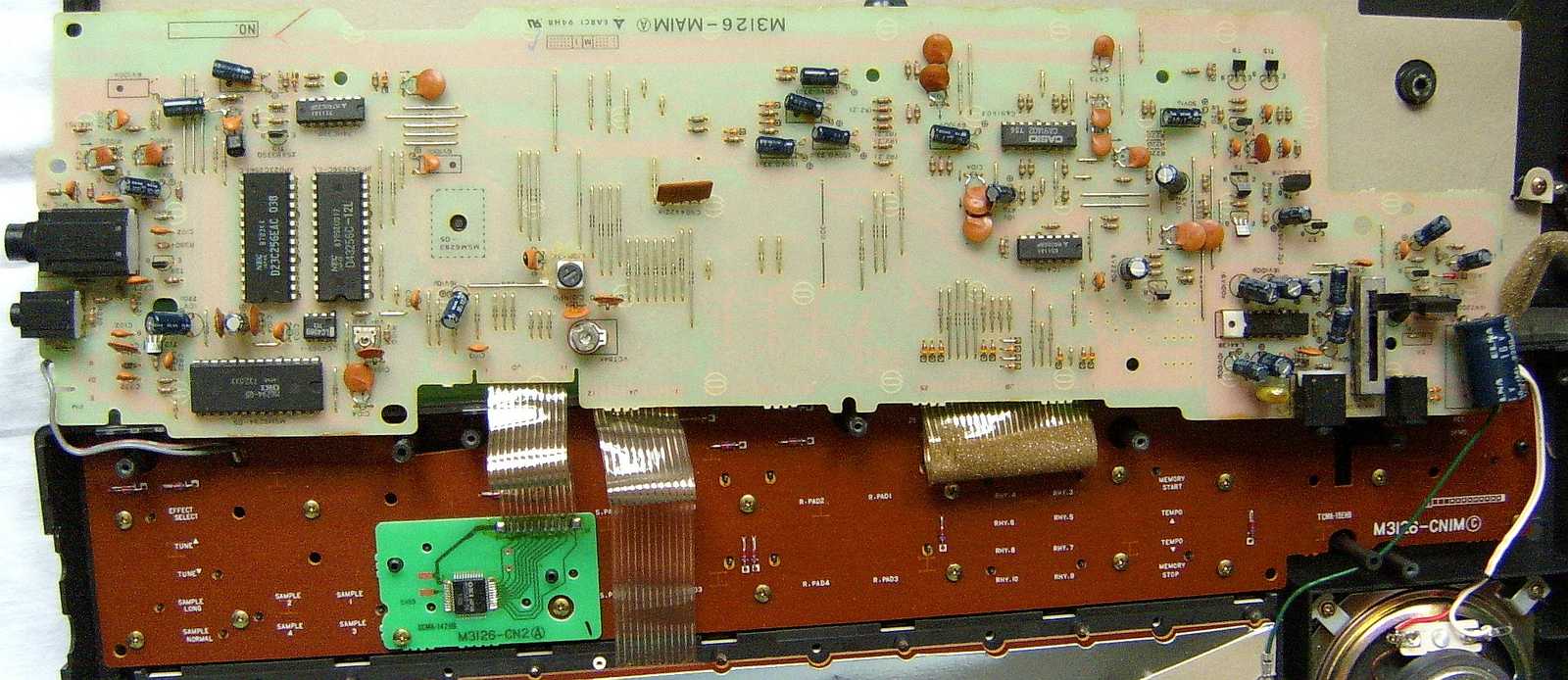
The PCB of the SK-8 has an empty soldering place for an 8 pin IC and some discrete stuff. The main PCB is labelled "M3123-MAIM(B)". A small diode LN26 glows red like an LED. The VCA IC "CA91A02" merges each waveform output with the corresponding envelope signal. Next to it are 100 kOhm resistors those analoguely mix the main voice, accomp. and obligato channel of the ROM-Pack music; reducing the resistance reduces the volume of the corresponding channel. The main CPU is the SMD IC "OKI M6283-05" (pins count clockwise), which also polls the keyboard matrix. The ROM pack slot is connected to CPU pin 41 /CE2 (chip select), 46 CP1, 47 CP2 (clocks), 48 OP (/address, data) and 53..56 D4..D7. Pin 100 Vin is the sampling sound input. The sample percussion is produced by the percussion generator IC "OKI M6294-02", which contains 16KB ROM and 8bit DAC. keyboard matrixAll unknown function names and in/ out numbers in this chart were chosen by me. I later found an SK-8/A service manual and so added some missing entries, but its matrix is partly wrong (e.g. rhythm names are from SK-5) and shows neither eastereggs nor doublets anyway. At least I could correct the CPU pin numbering. I am not sure if there are still mistakes in it, because some entries exist multiple times and initially others were missing.
The input lines are active-high, i.e. react on +Vs, thus any functions are triggered by a switch in series to a diode from one "out" to one "in" pin. The 'mode' switch is wired in such a way that by additional contacts it triggers a reset pulse only when moved away from its 'power off' position. It has no automatic power-on reset; that's why SK-series keyboards often freak out when connecting an AC-adapter or inserting batteries. The key lighting LEDs are in the matrix, wired from pin 76..66 KO0..KO10
to 86..88 PO1..PO3 buffered by a driver transistor in each row and column.
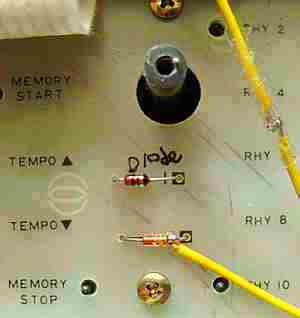
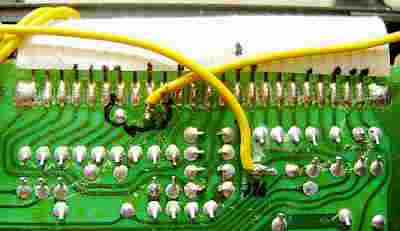
Solder each a button with diode in series from out11 to {in5..in8} of the keyboard matrix to get drumpads with the sounds {base, snare, hihat, clap}.
note: In Casio DM-100 it is likely impossible to use the SK-8 rhythm part or drumpads, because CPU pin 39 /CE1 (percussion enable) and 85 PO0 (percussion reset) together with data bus D0..7 are supposed to control the percussion IC "OKI M6294-02", which does not exist in the DM-100.
percussion pitch controlThe trimmer "VRI 5KB" on the main PCB adjusts the percussion sample pitch. You can add a potentiometer here.shitshotWhen pins at the ICs D23C256EAC (ROM) or D43256C (RAM) are shorted with each other through a 100 Ohm resistor, the "Auto Play" mode makes wild melody mess. Shorting pins at the M6294 makes the individual parts of the music play out- of - sync. (I recommend rather to interrupt traces by switches than to short things with low resistors to avoid possible chip overload damage.)Attention: I have only incomplete draft schematics of my modification, thus this description might be partly inaccurate or even wrong since it is based on them. pinout M6283The "OKI M6283-xx" (100 pin SMD, pins count clockwise, xx = software number of internal ROM) is the CPU of all classic SK-series sampling keyboards. It needs external ROM and RAM. (The address line order is really a mess. Don't ask me why - to ease PCB layout?). The CPU has for each polyphony channel a dedicated analogue 8-bit sample waveform output and a control output for an external analogue envelope generator to permit smooth decay envelopes without grainy 8-bit zipper noise. This envelope generator can be fully discrete (in SK-1) or use a VCA IC "Casio CA91A02" (in later models). Keyboards with sample percussion (like SK-8) employ an external percussion IC "OKI M6294-xx" (xx = software number). Keyboards with blip percussion (like SK-1, SK-10) filter them directly from the dedicated CPU output line SC (which unfortunately does nothing in keyboards designed for percussion IC). In long SK-keyboards (SK-200, SK-2100, SK-100) the M6283 is controlled by an external sound CPU HD61702 (variant of the PT-100 and MT-520 CPU) to increase polyphony by additional consonant-vowel timbres.caution: The SK-1 service manual says that this CPU uses "negative
logic", i.e. technically +5V is its GND while 0V is its -5V supply voltage.
So the voltages are not was the pin names suggest. All later SK-series
manuals see the voltages differently, which can be confusing. I use the
positive voltage naming convention (from 0V to +5V, not -5V to 0V).
This pinout was combined from the SK-1, SK-5, SK-8, SK-2100, SK-100 and PT-280 service manuals. Some pin meanings differ with the CPU software number, but the pin names in schematics stay always the same (e.g. ROM-Pack pins existed already in the initial SK-1), thus there may be eastereggs behind some of them. The SK-1 lacks percussion IC, ROM-Pack and key leds, so it does several things different (e.g. uses additional filter control outputs). The M6383-02 (SK-200 variants) acts as a slave controlled by a host
CPU instead of polling a keyboard matrix. Apparently the instrument type
is set by model select pins 61 and 84. According to service manuals, in
SK-100 the input pin 84 is wired to ground, while in SK-2100 it is connected
to output pin 61. Likely this sets the installed amount of RAM and count
of samples (SK-100 = 16KB for 2 samples, SK-2100 = 32KB for 4 samples).
The only SK-series keyboard based on a different CPU is Casio SK-60. The classic SK-series sampling hardware architecture and algorithm is well described in US patent 4667556. This sound hardware can record, play and loop samples using DMA (independent from the CPU core) based on address counters and gate logics. When waiting in sampling mode, it continuously records a loop into a preliminary RAM section (used as ring buffer) until a sufficient trigger level or key press start the main recording into a different RAM section. After finished recording, the CPU rearranges the data in memory (using a small internal RAM) to copy the useful portion of that "preliminary" recording (counting address backwards until level was 0?) in front of it to prevent loosing the begin of the sample. To permit record and playback at any note pitch, the sound hardware uses beside 17 waveform memory address bits additional 13 "decimal fraction" address bits, those simulate intermediate values through a linear interpolation circuit. This interpolation computes the difference between actual and previous (recently latched) sample word, that is multiplied by the fraction address; the result is output through a DAC and external envelope VCA. So it can step through a sample with non-integer fixed-point step width (which e.g. with low notes can be <1). As usual with Casio hardware (see 201), all registers of the sound hardware are genuinely 4 stage shift registers stepped with the system clock to implement fast multitasking of the 4 polyphony channels. DAC and ADC signals are separated by sample & hold circuits. So it can theoretically even record and playback simultaneously because all channels run independently (accessing the RAM in different time slots); US patents 5025700 and 5136912 suggested to use this for a resampling synth with overdub. Further early Casio sampling descriptions (with key and velocity split zones) are in US patents 4681008 and 5160798, those obviously depict the legendary synthesizer prototype COSMO ZZ-1 (an FZ-10M predecessor controlled by the personal computer Casio FP-6000). The blip percussion generator with digital waveform output + analogue envelope trigger pulse is in US patent 4586416. Sean Riddle has decapped the M6283-03 chip of a late SK-1(??) model. The die photos are on his website. pinout M6294The percussion generator IC "OKI M6294-xx" (28 pin DIL, xx = software number) is basically a 128Kbit ROM with built-in 8 bit DAC, designed to playback up to 8 percussion samples under control of an external CPU. Before MT-540, Casio used this IC in most keyboards with PCM sample percussion. Apparently the CPU sends a sample number and the IC plays it to the end by its own, using an external clock of 256kHz. The sample rate is 16 kHz (16 ticks per sample, 4 per voice), resulting in 1024 ms total playback time. The many unused pins (also in other keyboards) suggest that this chip type can also output digital data elsewhere or be daisychained with each other using MIXOUT to MIXIN for analogue signals and perhaps /CASOUT to /CASIN, but I found no keyboards doing this.(Thanks Scott Nordlund for some specs and software number info.)
This pinout is based on Casio SK-8/A service manual.
pinout CA91A02The IC "Casio CA91A02" (18 pin DIL) is a voltage controlled amplifier (VCA) used for analogue envelope control in mid of 1980th keyboards. This is one of the very few ICs with "Casio" brand name. The audio inputs and outputs are connected through capacitors to remove DC. The inputs need each a 100k resistor connected to +2.5V (from a voltage divider of 2 10k resistors between 0V and +5V). The IC contains apparently 4 mixing amps - possibly even 5 (suggested by unused pins with 100k resistor to 2.5V), but I guess the remaining pins are only bias inputs. The original pin names are unknown. (Pinout based on SK-8/A schematics.)
|
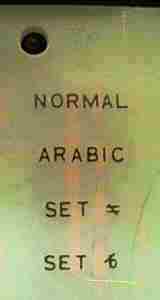
To edit the tone scale, set the "scale" slider to the 1st "SET" position and press the keys for all octave tones you want to shift a quartertone up (indicated by a bongo sound), or slide it to the 2nd "SET" position and do the same to set octave tones a quartertone down. Then set it to "ARABIC" to play the edited scale. In this mode also the "slow rock" and "waltz" rhythm is replaced by the 2 oriental rhythms "adani" and "romba junubi" (adani sounds like the typical oriental dance/ belly dance rhythm). All these features also work on the upgraded normal Casio SK-8.
The upgraded instrument is not only good for oriental music, but sounds
very anti-establishment and partly reminds (depending on your own warped
tone scale) to Atari 8-bit POKEY music. (Remember, you can sample what
you want and play it in that scale.) Also the 2 oriental rhythms may be
useful for tribal-like tekkno. In opposite to the upgraded SK-8, the real
Casio SK-8A has a different preset sound set {piano, violin, pipe organ,
qanun, trumpet, oud, clarinet, nay} that has sounds in different order
and includes 3 changed preset sounds due to different ROM. I don't know
if any oriental music ROM-Pack cartridges were released; with my
normal ROM-Packs the "arabic" mode does nothing.
The same CPU and ROM like SK-8 was also used in the upper keyboard of the Casio DM-100 (the likely world-only dual- midsize- keyboard instrument | seen in service manual). An odd cross between SK-8 and Casio SK-1 hardware was the Casio SK-10 (and the even more crippled Casio SK-2). Apparently a rare toy variant of SK-8 was the Casio KS-03 Kids Sound Keyboard. It has a red case with orange rubber sides shaped like My Music Center and Casio KA-20, detachable microphone for sampling, 4 preset rhythms {rock, swing, march, waltz}, 4 drumpads {bass, snare, hi-hat, sample}, key LEDs and came with the ROM-Pack RO-558 "Kids Selection" (told by e-mail, seen on eBay).
An earlier midsize oriental keyboard was Casio AT-40 (case like MT-45, hardware and sound resembling MT-70).
Questions: Did Casio release oriental versions of any other small keyboards? Or are any other cheap and small oriental keyboards known? As far I know, at least in Europe only professional fullsize General MIDI keyboard workstations were advertised as "oriental keyboards", but the cheapest thing I remember was a fullsize keyboard with MIDI and retail price about 350€. Are there any really cheap oriental keyboard tablehooters with hardware resembling My Music Center or MC-3? (Regarding how many that cheap tablehooters end in turkish shops, there would be undoubtedly demand for them.) On the LCD of my McCrypt MC-37 (49 midsize keys) there are unused segments for an arabic scale mode, but I found no hints to such a variant on the Medeli site yet and haven't examined its hardware further.
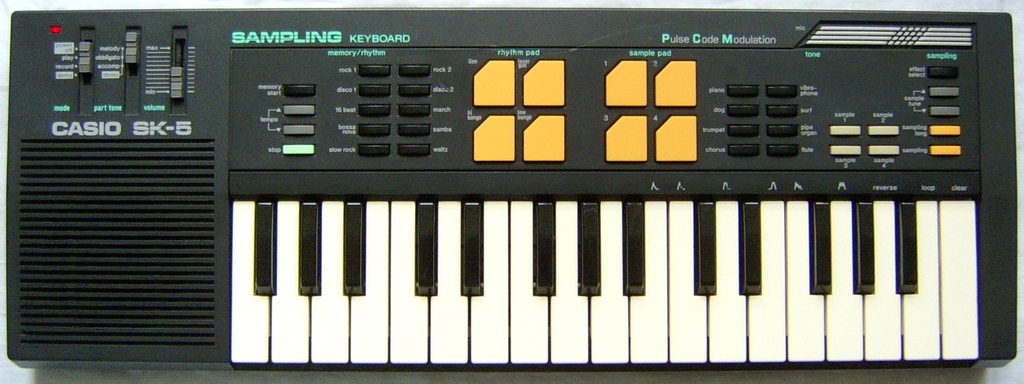
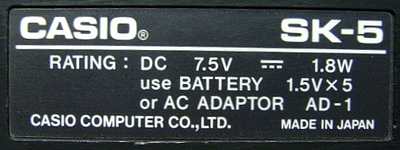
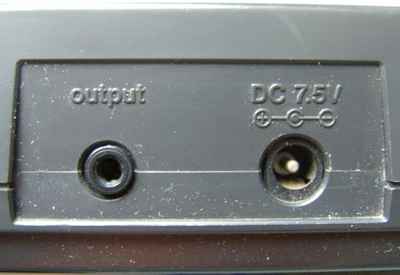
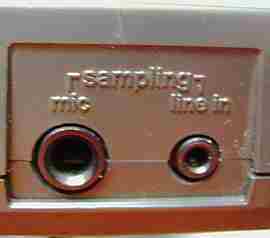
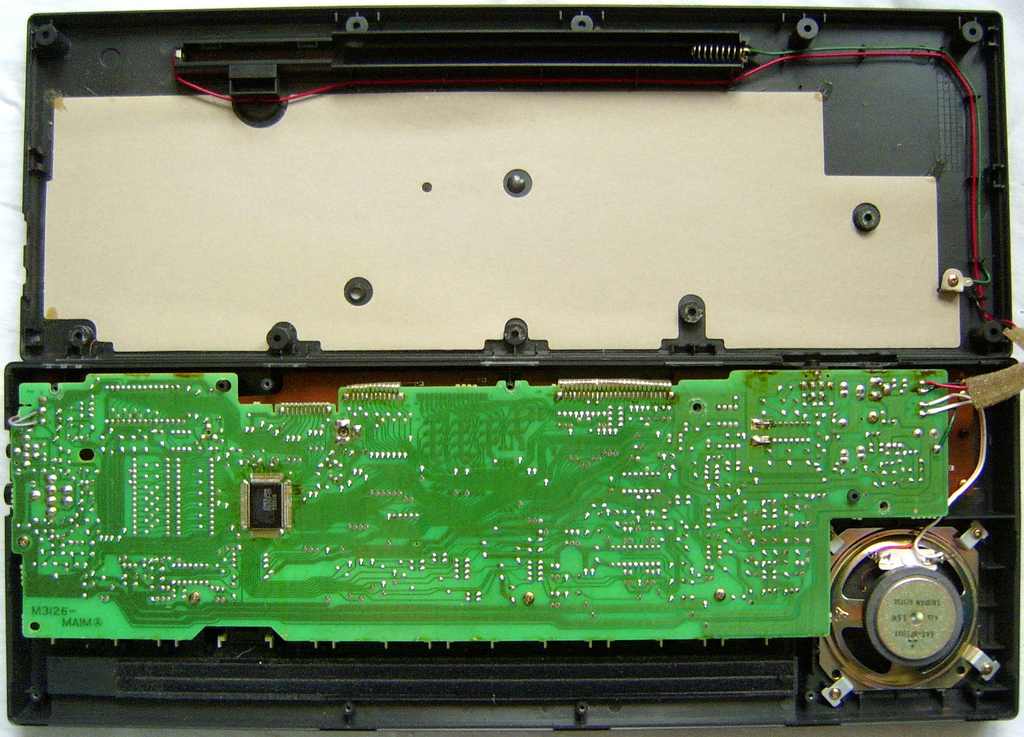
The SK-5 is quite well known on the internet. It was also released as Realistic Concertmate-650. Technically it is basically an SK-8 with changed ROM and percussion samples, thus I only explain here the differences.
 |
 |
 |
 |
 |
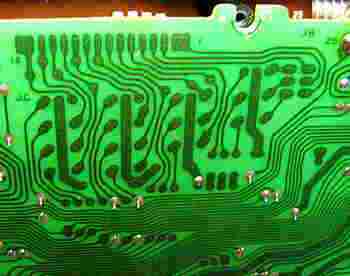
unused LED traces |
 |
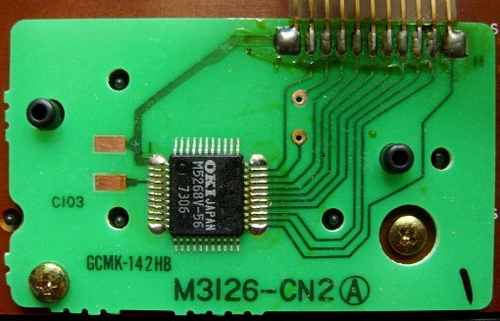
internal ROM-Pack PCB |
Some of the preset sounds differ from the SK-8. "chorus" is a short looped sample of a dull human chorus. "dog" is a low dog bark. "surf" is an ocean wave sound made from digital noise with a well audible loop point. It fades louder and quieter again by a slow 0.3Hz volume LFO. When no samples are recorded, the 4 sample pads here trigger the default preset sounds {piano, vibraphone, dog, surf}. The percussion pad "lion" plays a short and grainy lion roar sample. "laser gun" plays a short zap noise than reminds to a short looped bullet ricochet sound. "hi-" and "low bongo" are what the name suggests.
The rhythm patterns differ from the SK-8 and also some percussion sounds are changed; e.g. the longer hissing metallic cymbal is gone (to save ROM memory?). Most remarkable are "rock 2" and "disco 2", those use effect sounds. "rock 2" employs the high pitched "dog" sample (sounds like a cuirca). "disco 2" is rather a lo-fi oldschool hiphop rhythm with intensive rhythmical use of the "laser gun" and some "lion" noises, which reminds to trashy Chinese toy tablehooters from 1990th like Gogo-Train. But most rhythms keep the characteristic woody knocking style of the SK-8.
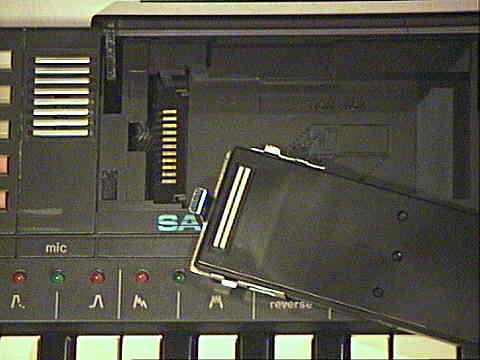
The demo section proves that this instrument is still a very close relative of the SK-8 ROM-Pack hardware. The song selection works exactly like there and even the "part tone" slide switch still exists to change the "melody", "obligato" and "accomp" voices during playback. The ROM for the 7 demo songs is technically nothing else than an internal ROM-Pack and it even sits on a separate small PCB. But the demos itself were likely especially composed for the SK-5 because they intelligently use the particular effect sounds those do not exist in standard ROM-Pack keyboards.
The 7 demo songs are: (according to the manual)
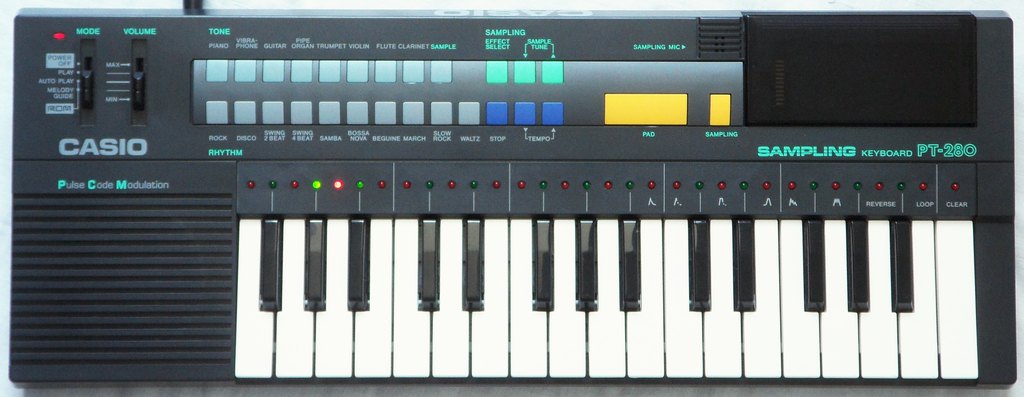
This rare Casio SK-8 variant of 1988 (service manual date) apparently only came out in Japan. It has only 1 sample and drumpad and likely was shipped with the Japanese ROM-Pack RO-581.
 |
 |
 |
 |
| removal of these screws voids warranty... | ||
 |
 |
|
|
|