 |
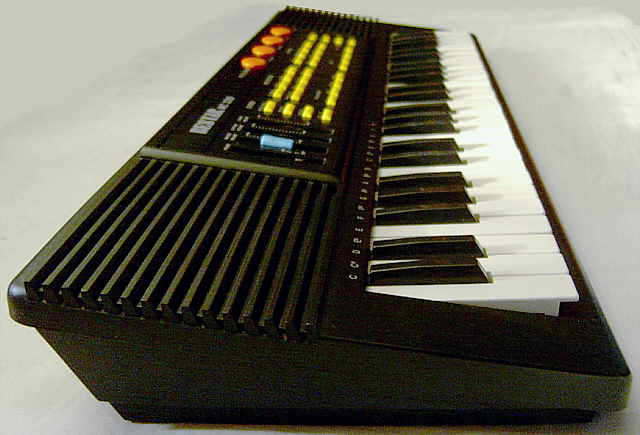 |
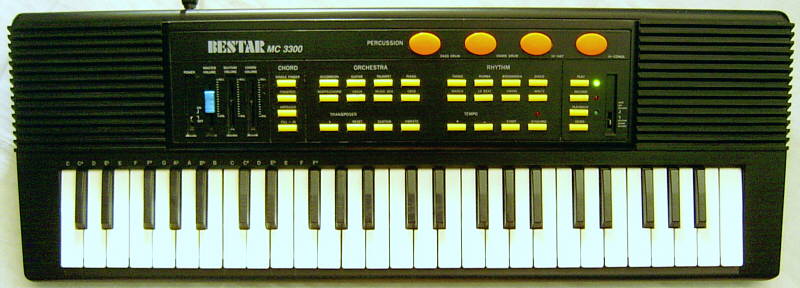
| Bestar MC 3300 | squarewave keyboard with programmable polyrhythm & faulty accompaniment |
This squarewave tablehooter sounds much like Letron MC-3, but has nicely warm timbres and some really bizarre bugs. It has a realtime programmable drum pattern that can be run simultaneously with a given preset rhythm (with independent pattern lengths) to form complex polyrhythmic textures or tribal rhythms. 2 of the 8 preset rhythms have a totally messed up accompaniment, that play weird disharmonic nonsense. Also the accompaniment voice in the demo goes nuts. The keyboard is extremely responsive (almost like touch sensor keys), which permits special play techniques.
|
|
There is a small polyphony bug: when in 4 different octaves the keys of the same note is held down (excluding the 49th key), the keyboard matrix considers these 4 keys to be unpressed. Apparently this is caused by an overloaded matrix output line; however it does not really disturb melody play since this note combination is fairly unusual in average music. Regarding the many flaws, I am not sure if my MC 3300 specimen is defective, but I guess that its CPU was just a lousy design, since I found various other cheap tablehooters with similarly messed up accompaniment and demos.
This keyboard was also released as TrendLine MC 3300.
 |
 |
 |
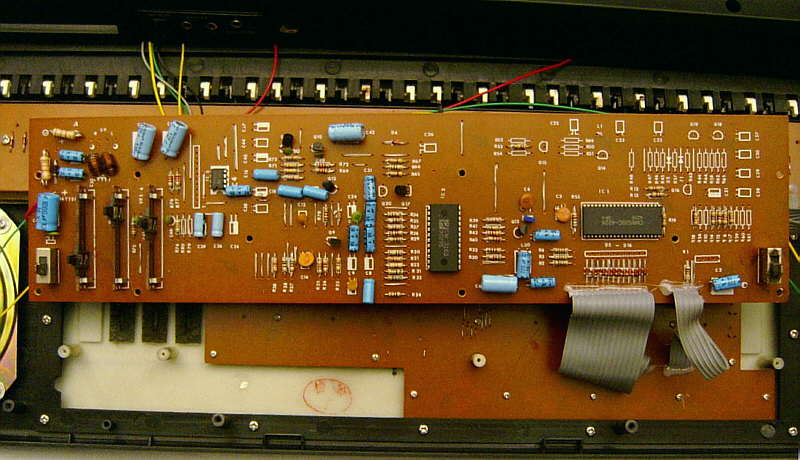 |
 |
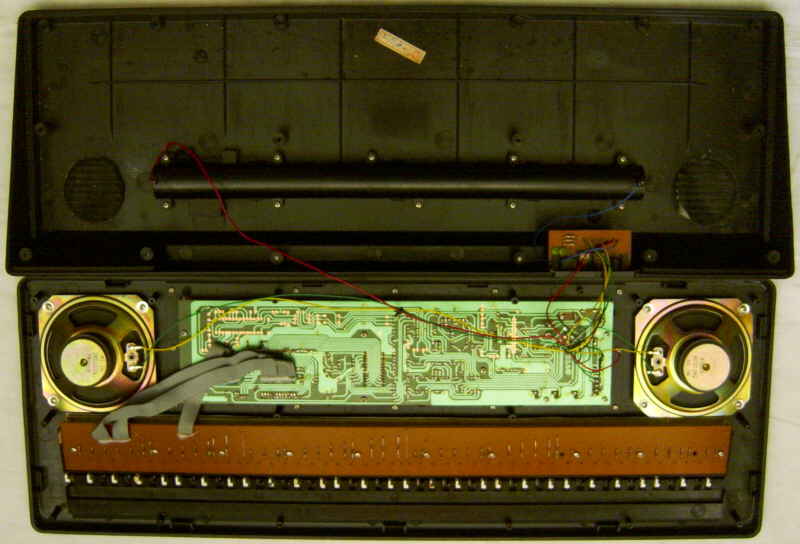
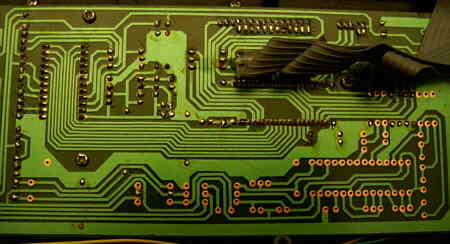 The
PCB has many unused empty solder holes. The
PCB has many unused empty solder holes. |
Like with Letron MC-3, the preset sounds are made from squarewave variants (only "music box" is plain) and simple volume envelope with some zipper noise, which sounds very electronic and not at all like what the sound names suggest. Many timbres remind to reed organ voices. The sustain button adds 2s of sustain to them, while the vibrato button adds a fast square 8Hz vibrato of low intensity.
The percussion is made from the same electronic noises like with Letron MC-3, however the closed hihat is missing and the 8 preset rhythms here include an automatic fill-in pattern (with accompaniment) every 4th bar, which makes them less versatile and resemble rather certain German military march patterns than what their name suggests. The accompaniments contain much staccato chords and makes some strange glitches, that semi- randomly slightly changes the timbre when switching back and forward between keys or turning it off and on again; apparently these are phasing phenomenons by assigning the sound chip polyphony channels in different order, but this also makes the sound more vivid. In fingered chord mode it even plays low chord section notes in a lower octave than the same higher note; most modern keyboard make them warp within the same octave. The fingered mode accepts beside establishment chords also random note combinations (however when only 1 key it pressed, it still plays some kind of chord or duet instead of only a monophonic chord voice, and it responds a little slow). The accompaniment of "bossanova" and "16 beat" totally goes nuts and plays very disharmonic walking bass patterns instead of the correct chords, which makes them unusable for normal melody play. But the resulting cacophony reminds to the naughty bass voice of the Atari XL "Ballblazer" theme and certainly can make nice tekkno grooves ("Mouse On Mars" style?). The fill-in button adds a simple fill-in pattern (without accompaniment). The "arpeggio" button switches to a more complex (over- orchestrated) accompaniment variation pattern, however this has not really to do with arpeggio. With rhythm off, the fingered chord mode makes a key split with a nicely warm and dull reed organ voice in the left keyboard section; in single finger chord mode it sounds much like pressing chord buttons on an old chord organ (see Graber Rogg CTX1300) - very nostalgic. Nice is that the chord volume slider reduces the bass amount much stronger than the trebles, which makes the chord only thinner instead of quieter. With accompaniment or manual chord the main voice is only monophonic.
To use the note sequencer, switch its slide switch to "note key record" and press "record" (lights red LED next to it). You can now play a short monophonic note sequence. You can also run a rhythm during this, but rhythm or chords will not be recorded. The sequencer ignores tempo setting and has a very coarse resolution. The red LED will go out when the memory is full. (But sometimes when it runs out of memory, a note will hang instead; press 4 keys together to mute it.) Press "playback" (lights green LED next to it) to start the sequence. You can re-trigger it at any time (also during keyboard play!) by pressing "playback" again, and stop it by pressing "play". The sequence is deleted by recording any new notes or by pressing "record" again during recording.
Programming a rhythm works almost exactly the same. The difference is only that you slide the switch to "rhythm sound record" mode before you press "record" and enter your monophonic user pattern with the 4 drumpad buttons in realtime. (Recording anything deletes previous pattern and note sequence.) When the pattern is finished, immediately press "play" or "playback" to stop recording; else you will record a pause at the end. Press "playback" to play or re-trigger the user pattern in a loop; press "play" to stop it. The funny thing is now that this sequencer appears to be completely independent from the rhythm engine of the instrument; it not only ignores tempo setting, but can be started or stopped at any time even during rhythm, which forms strange polyrhythms. And because the percussion generator has limited polyphony (maximum 2 channels?), the sounds of both sources cancel out each other, which results in complex jungle or tribal tekkno rhythms (similar like with my modified Bontempi B50).
The demo plays alternatingly 2 classic melodies, but keeps the accompaniment in a fixed key, which sounds very disharmonic. (Unlike the sequencer, the demo responds on tempo setting and is the only function that disables the sequencer functions; also {single finger, fingered, arpeggio, fill-in} are disabled here.)
Possibly a predecessor of this instrument was the ABA-88,
which had similar flaws and functions and a similar CPU number. A bigger
Bestar
keyboard with minor flaws and halfway similar case design like the MC 3300
was the Bestar MC 3800.
| removal of these screws voids warranty... | ||
 |
 |
|
|
|