CASIO
SYMPHONYTRON
8000 |
modular stage organ |
|
|
|
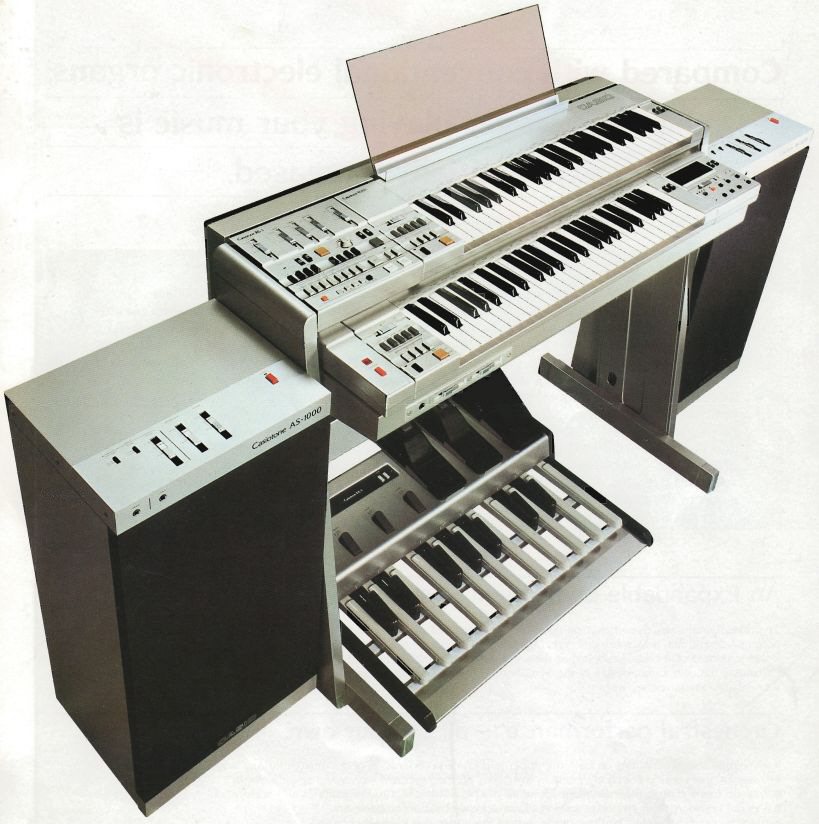
The Casio Symphonytron 8000 was an ultra-rare modular stage organ
made in 1984. I read that only about 100 specimen were built. Its consonant-vowel
hardware was related to Casio MT-65 (see CT-410V)
with similar sound style.
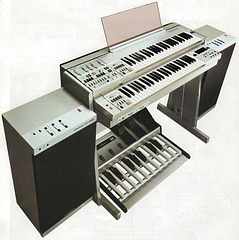
(brochure photo) |
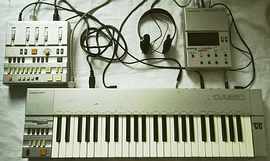 |
I own only some of the components of this huge machine, but downloaded
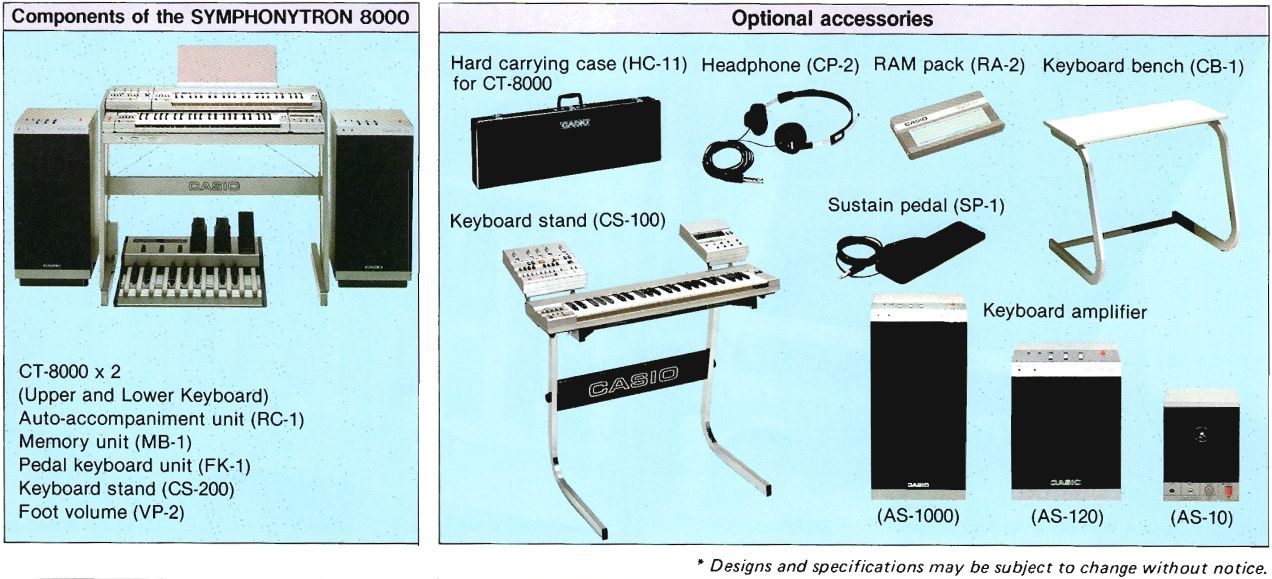
the manual and brochure. The complete expandable organ system was assembled
from the following detachable units:
-
2x keyboard CT-8000
-
dual keyboard stand CS-200 (with integrated audio mixer)
-
auto accompaniment unit RC-1
-
memory unit MB-1 (sequencer, uses RAM-Pack
RA-2)
-
pedal keyboard unit FK-1
-
foot volume pedal VP-2
-
2x sustain pedal SP-1
-
2x speaker combo amp AS-10 (small) or AS-120 (medium) or
AS-1000
(large, with reverb)
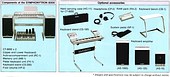
(brochure pictures) |
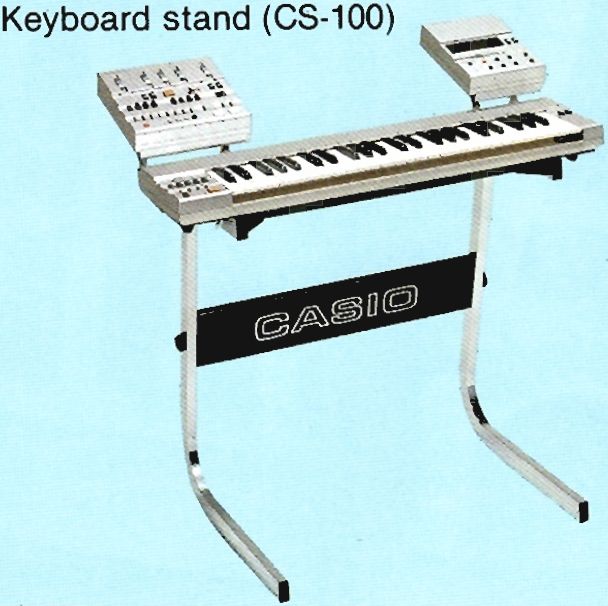
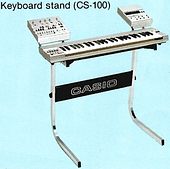
A smaller expansion level used only one CT-8000 on the stand
CS-100.
The CT-8000 could be also used separately with an external amp; there was
even a hard carry case HC-11 made for it. RC-1 and MB-1 are powered
by the CT-8000 and can not be used separately.
some features:
-
per keyboard 49 fullsize keys
-
polyphony 8 notes per keyboard
-
monophonic pedal bass voice
-
49 preset sounds {piano 1..4, honky tonk piano, zimbalon, synth. sound,
harpsichord 1..2, celesta 1..2, marimba, harp 1..3, koto 1..2, taisho koto,
banjo, mandolin, guitar 1..3, elec. guitar 1..5, elec. bass, pipe organ
1..5, accordion, bagpipe, oboe, clarinet, flute, shakuhachi, wawa, horn,
flugel horn, trumpet, brass ensemble, string ensemble, violin, cello, double
bass} selected by keyboard keys + mode switch
-
18 pedal keyboard preset sounds {organ 1..4, tuba 1..2, bassoon 1..2, wood
bass (arco) 1..2, wood bass (pizz.) 1..2, elec. bass 1..2, harpsichord
1..2, piano, synth. chime} selected by pedal keys + mode switch
-
16 semi- OBS preset rhythms {rock, disco, 16 beat, samba, beguine, swing
2 beat, waltz, slow rock | rock 'n' roll, march, cha-cha-cha, bossa-nova,
lating swing, swing 4 beat, jazz waltz, shuffle}
-
versatile accompaniment with each 2 arpeggio & bass variants
-
semi-analogue percussion
-
keyboards with sustain, reverb, vibrato, stereo chorus
notes:
The silver metallic painted system was heavy and quite a mess of plugged
cables since it lacked a clever multicore or bus concept. Furthermore it
was infamous for its flimsy combo amp speakers, those thin pressboard cabinets
crumbled apart by rough handling or humidity, which made it not really
stage-proof. Not least because it came out during the end of the home organ
hype, it was a commercial flop, and so (similar like Commodore C65)
only few demonstration specimen were built.
The Symphonytron had 49 preset sounds (in each keyboard) and the monophonic
bass pedal keyboard had 18 keys and preset sounds. The accompaniment unit
had 16 preset rhythms. The lower keyboard was also used for accompaniment.
The voice of the lower keyboard could be layered with the upper keyboard,
and both keyboards also could be detuned and transposed against each other
for additional sound variation. With 2 keyboards present, there was an
additional harmonizing mode (likely layering both keyboard voices in a
special way). You can also combine rhythm with manual chord etc.; the accompaniment
was similarly versatile like with Antonelli
2495. (Note: Despite the "8" in its name, the Symphonytron
8000 and its CT-8000 keyboard unit had neither a ROM-Pack
slot nor key lighting.)
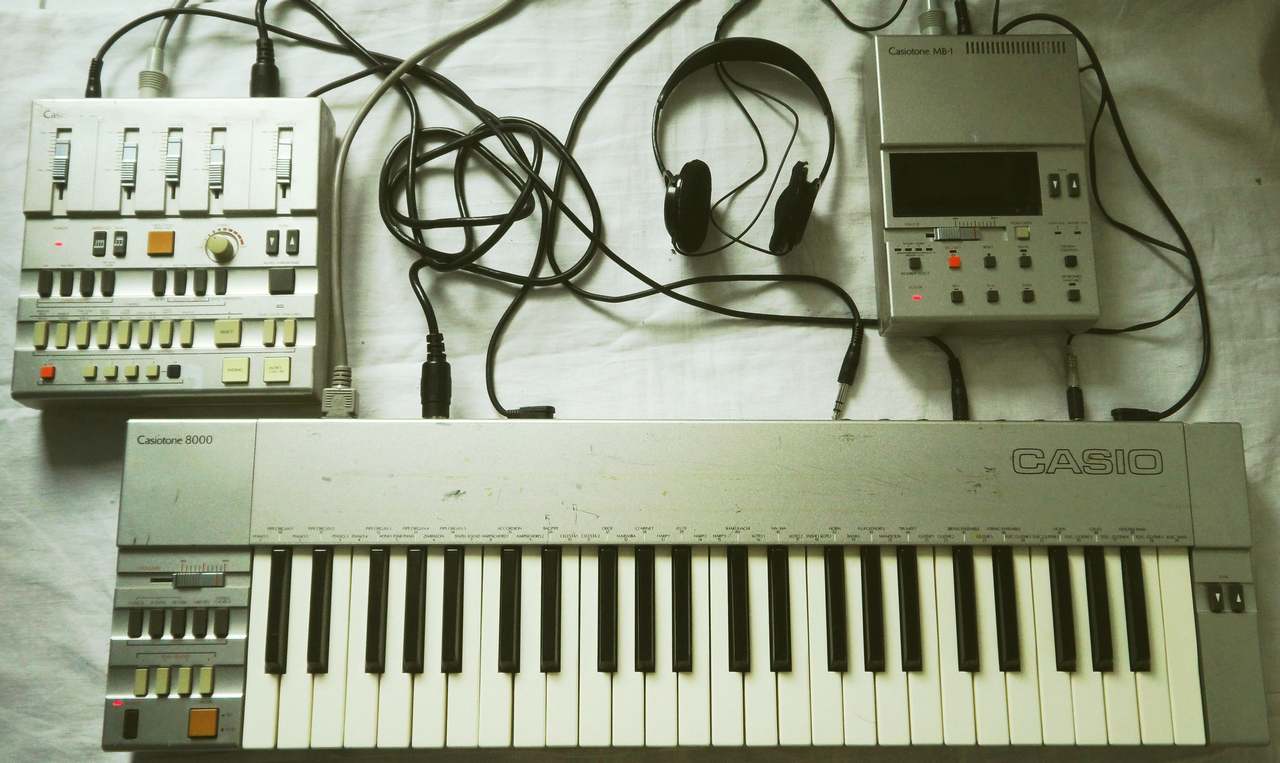
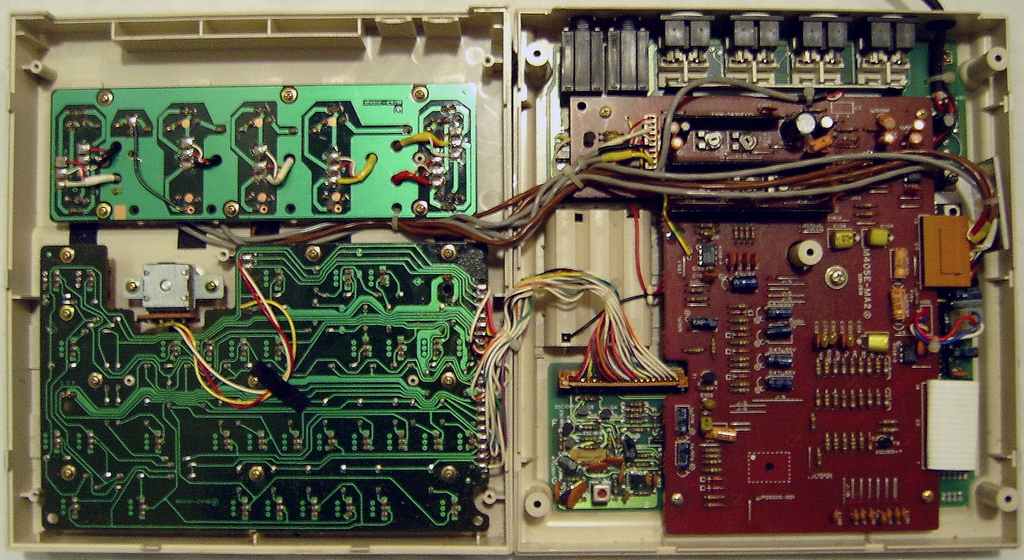
I got on eBay only one CT-8000, the RC-1 and a defective MB-1
in very beaten up condition (full of scratches, dirt and glue residues).
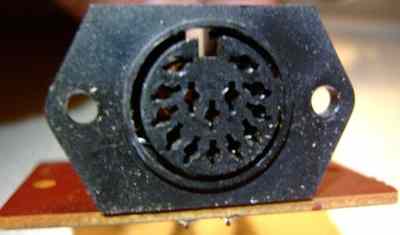
Because it lacked the special DIN14 data cables, I ordered 3 Atari ST
floppy cables, those work perfectly with the RC-1 (with one keyboard it
does key split accompaniment with arpeggio, and also the trio mode works).
How ever my MB-1 doesn't work at all. Also CT-8000 and RC-1 contain (as
the only Casio instruments I know) each a soldered eprom; I backed up all
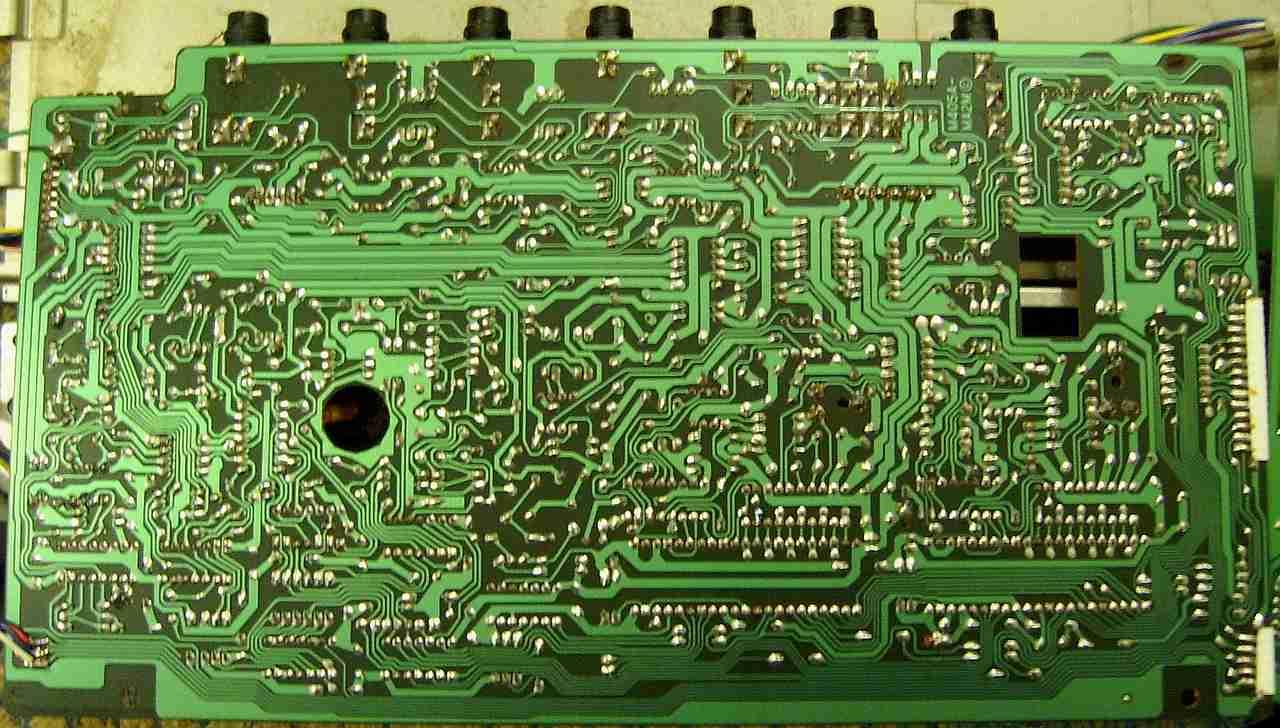
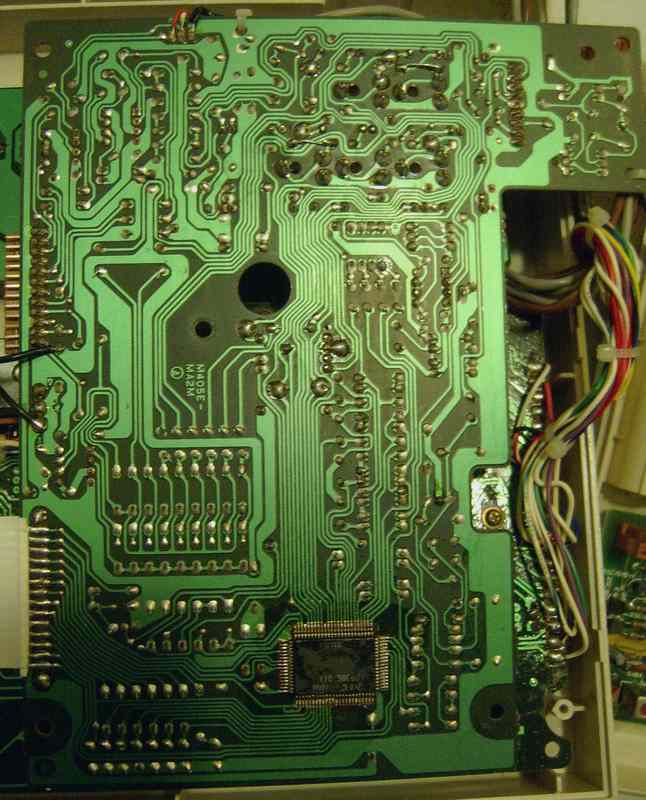
3 to avoid data loss. The multi-chip hardware is quite complex and particularly
the RC-1 and MB-1 have several stacked PCBs in their crowded case. Fortunately
there are are some pinout marks on them, those may help to decipher them.
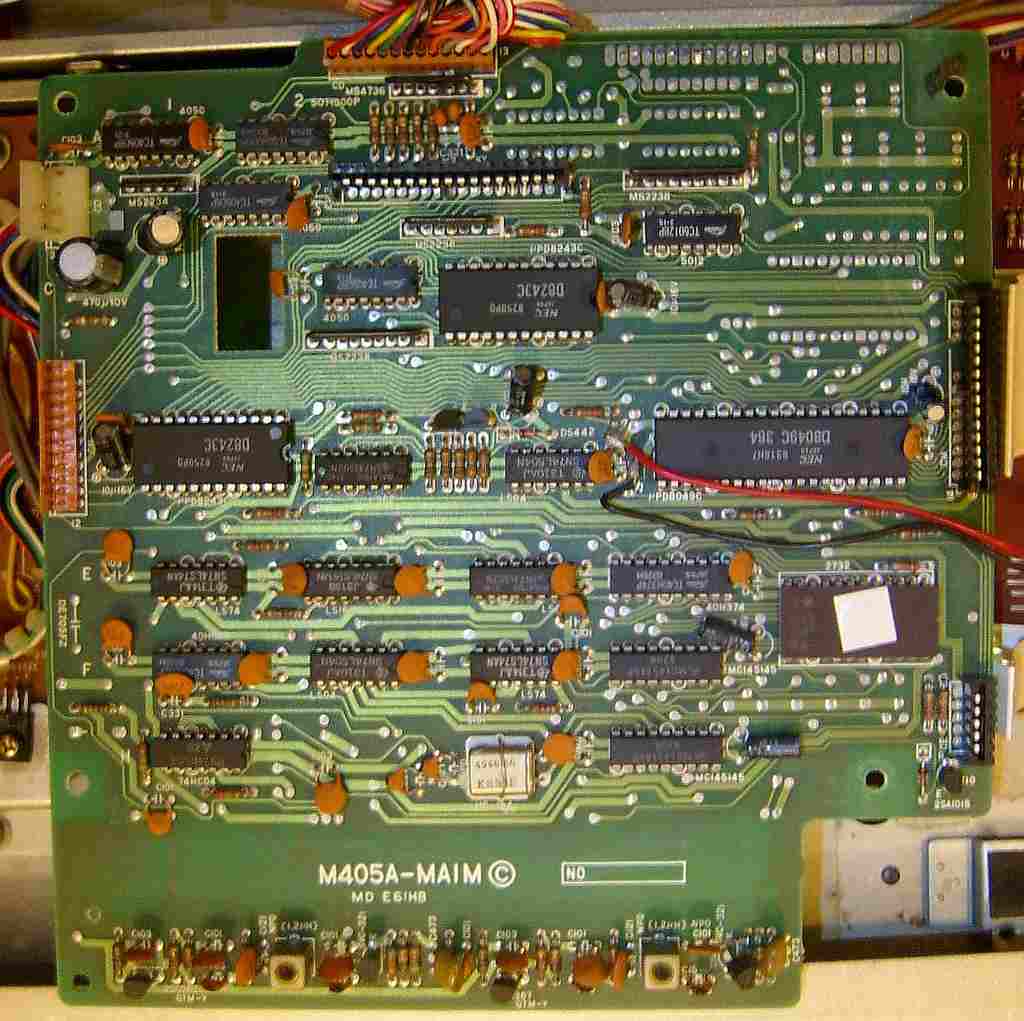
The MB-1 and CT-8000 both have the same CPU "NEC D8049C 364" (Intel MCS-48,
I dumped its firmware) with sound IC "D931C
011". The RC-1 accompaniment CPU is a "NEC D930G
011" (controlled by an external CPU). So they are far relatives of the
Casio
MT-65 hardware class (technically closer to Casiotone
7000). I don't own the FK-1 pedal board, so I have no clue what
is inside. Other people know more about this.
The Symphonytron 8000 has been partially emulated in MAME.
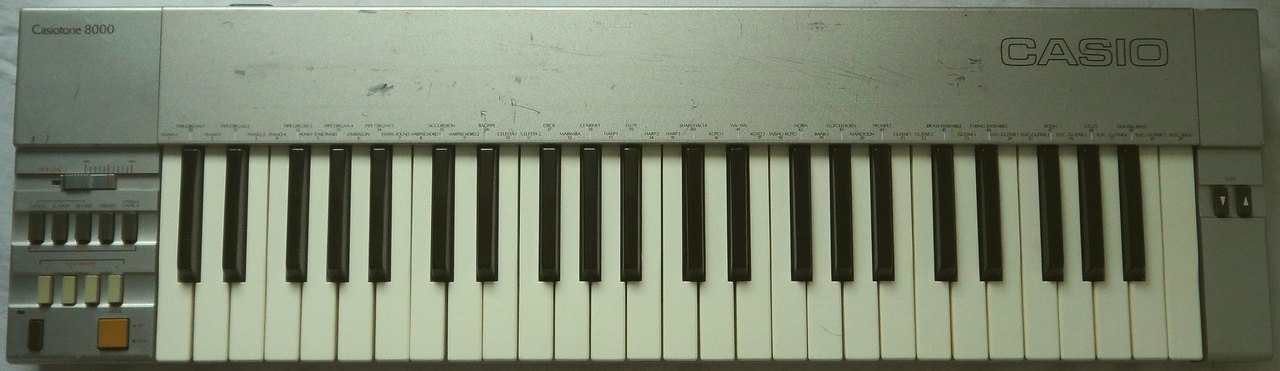
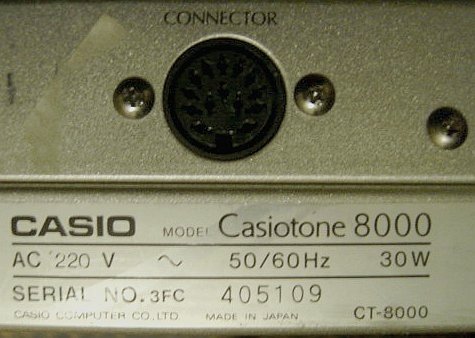
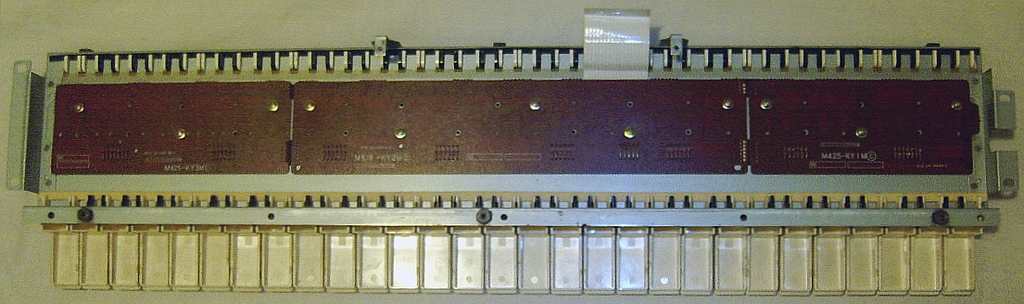
Casio CT-8000
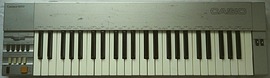
The keyboards of the Symphonytron
system can be also used separately (although they have no speakers). Their
user interface resembles Casiotone 201
and 202 despite newer hardware.
main features:
-
49 fullsize keys
-
no speakers
-
polyphony 8 notes
-
49 preset sounds {piano 1..4, honky tonk piano, zimbalon, synth. sound,
harpsichord 1..2, celesta 1..2, marimba, harp 1..3, koto 1..2, taisho koto,
banjo, mandolin, guitar 1..3, elec. guitar 1..5, elec. bass, pipe organ
1..5, accordion, bagpipe, oboe, clarinet, flute, shakuhachi, wawa, horn,
flugel horn, trumpet, brass ensemble, string ensemble, violin, cello, double
bass} selected by keyboard keys + mode switch
-
4 tone memory buttons (to assign 4 of the preset sounds for quick access)
-
stereo chorus
-
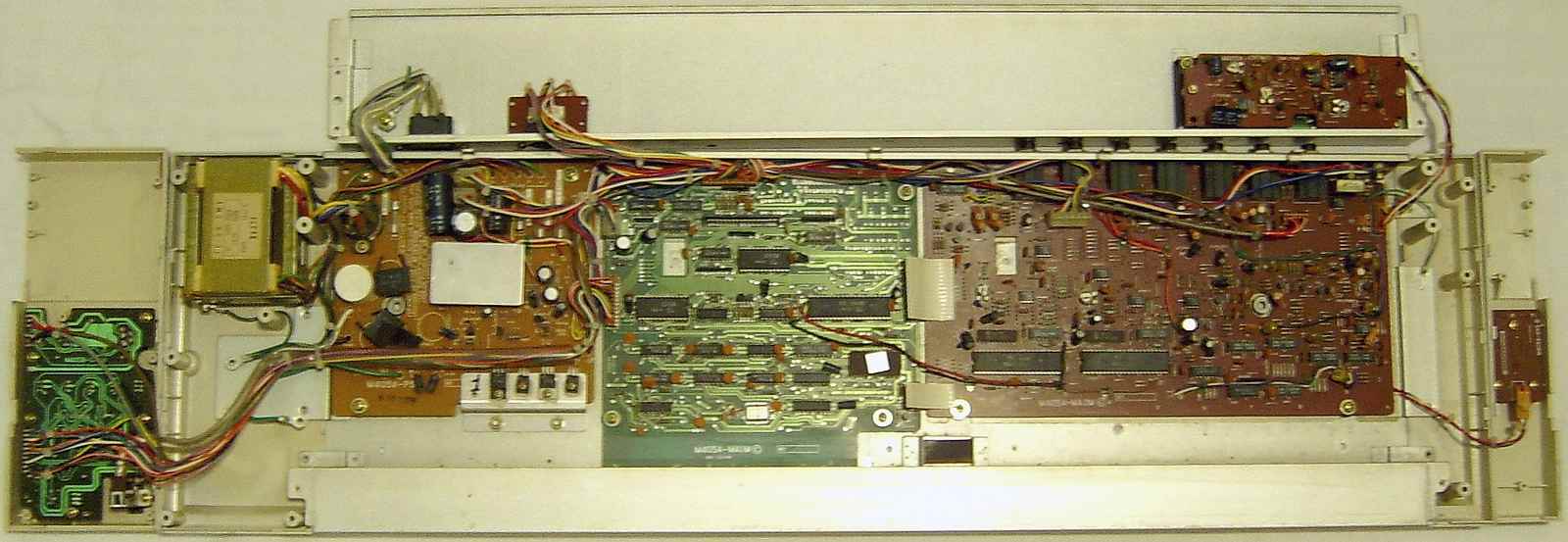
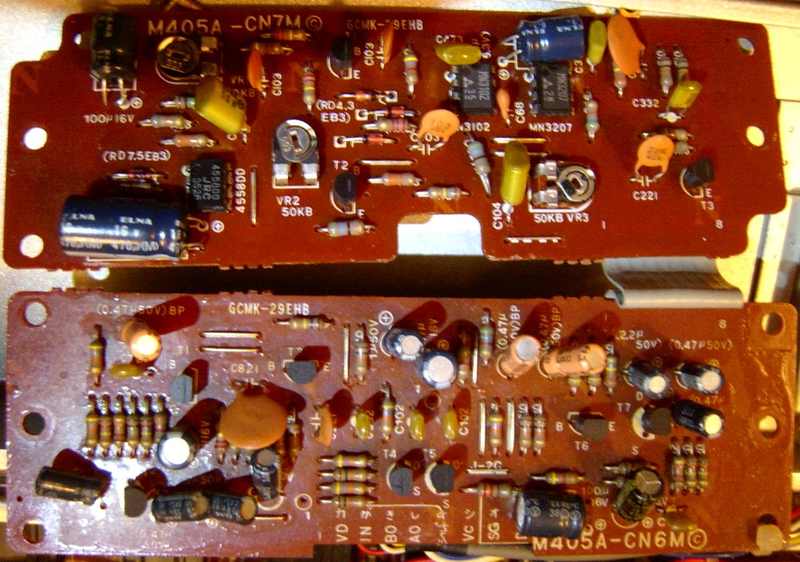
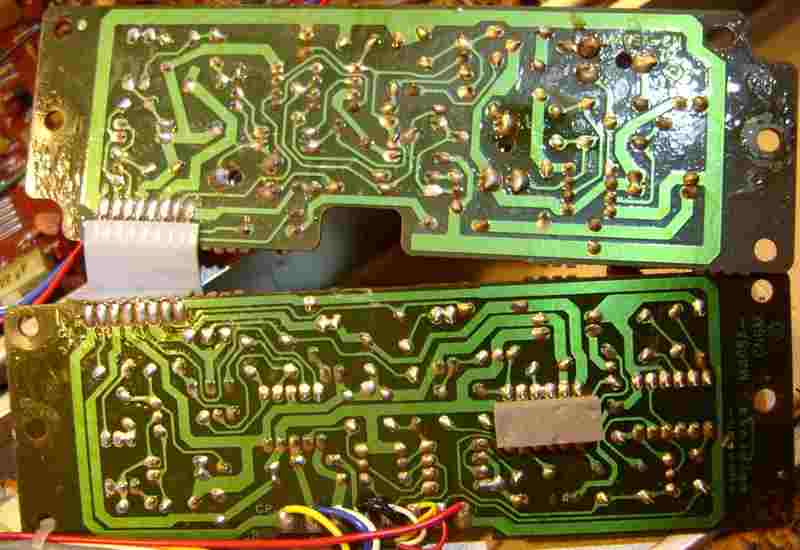
complex multi-chip hardware:
-
CPU= "NEC D8049C 364, 8318H7, Japan" (40 pin DIL, MCS-48)
-
2x sound IC= "NEC D931C
011" (42 pin DIL)
-
eprom "Hitachi HN462732G" (24 pin DIL, 4KB, sticker unlabelled)
-
stereo chorus: BBD= "MN3207" (8 pin DIL, 1024 steps), clock= "MN3102" (8
pin DIL)
-
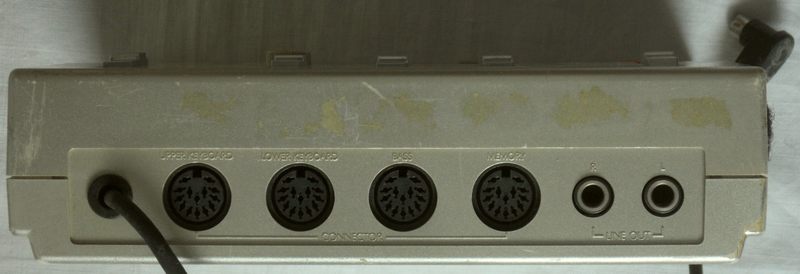
jacks for data, line out, line in, hadphone, volume pedal, sustain pedal
and 2x DC supply voltage out
The CT-8000 seems to be the only Consonant-Vowel keyboard that apparently
layers 2x D931C in its
preset sounds for having 2 differently filtered subvoices like in earlier
models. Like in Kawai MS20, when you
set a preset sound on the keyboard it sounds a short fanfare with it (always
the same notes). The CT-8000 also contains 2 DC voltage output jacks for
supplying the RC-1 and MB-1.
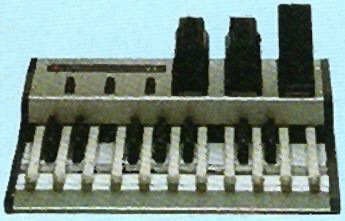
Casio FK-1
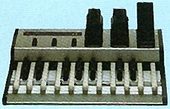
(brochure photo) |
This is the Symphonytron bass
pedal unit. I don't own this.
main features:
-
18 keys pedalboard
-
monophonic
-
18 bass preset sounds {organ 1..4, tuba 1..2, bassoon 1..2, wood bass (arco)
1..2, wood bass (pizz.) 1..2, elec. bass 1..2, harpsichord 1..2, piano,
synth. chime} selected by pedal keys + mode switch
-
volume pedal
-
sustain pedal
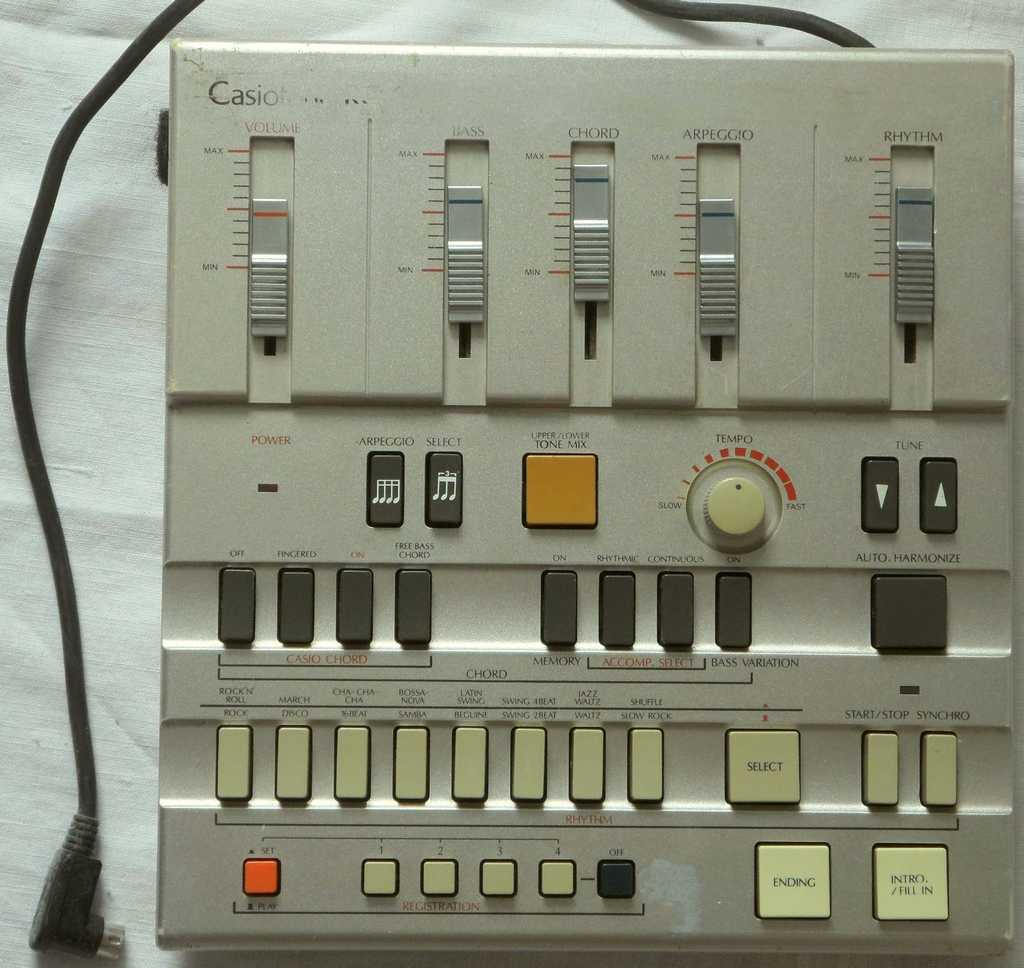
Casio RC-1
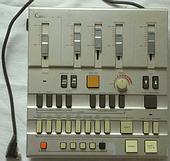
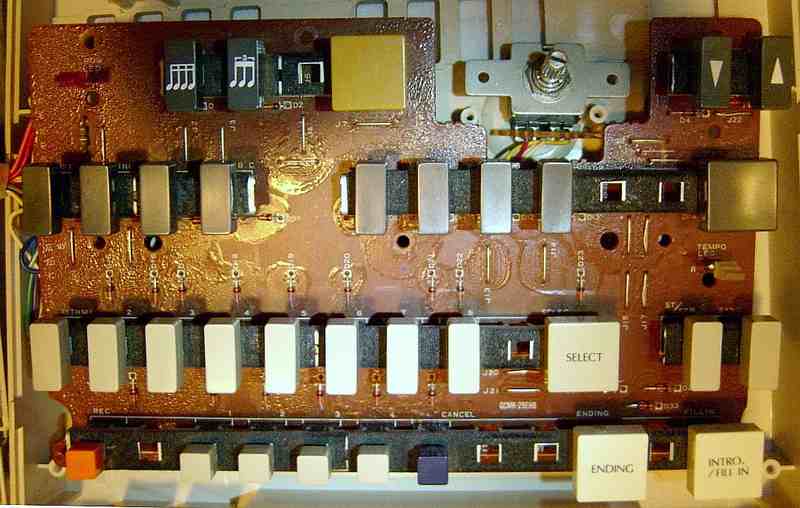
The accompaniment unit is the central of the Symphonytron
system, where the data cables of all other components are plugged into.
Rhythm and accompaniments resemble Casio MT-65 (see CT-410V).
It has complex patterns with arpeggio including triplets. The good quality
semi-analogue percussion has several congas. The bass voice sounds nicely
warm.
main features:
-
16 semi- OBS preset rhythms {rock, disco, 16 beat, samba, beguine, swing
2 beat, waltz, slow rock | rock 'n' roll, march, cha-cha-cha, bossa-nova,
lating swing, swing 4 beat, jazz waltz, shuffle}
-
versatile accompaniment (2 arpeggios, 2 bass variants)
-
intro/ fill-in button
-
ending button
-
manual chord mode
-
auto harmonize button
-
tone-mix (can layer upper+lower keyboard)
-
4 registration OBS buttons
-
volume sliders for master, bass, chord, arpeggio, rhythm
-
tempo knob
-
tuning +/- buttons
-
semi-analogue percussion
-
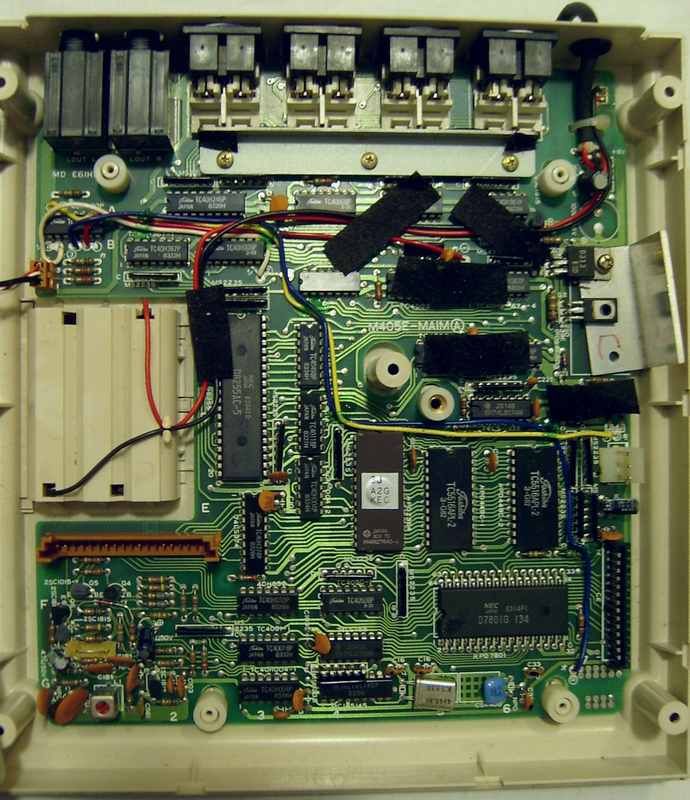
complex multi-chip hardware:
-
main CPU= "NEC D7801G 134, 8314P1, Japan" (64 pin zigzag DIL)
-
accompaniment CPU= "NEC D930G
011, 8327EK, Japan" (80 pins SMD)
-
I/O IC= "NEC D8255AC-5, 8304ED" (40 pin DIL, Intel 8255A)
-
2x SRAM= "Toshiba TC5516APL-2, 3-GB2" (24 pin DIL, 2KB)
-
eprom= "Hitachi HN482764G-4" (28 pin DIL, 8KB, sticker "3J, A2G, KEC")
-
percussion hybrid= "S648F18S, 38011"
-
percussion hybrid= "S645F228, 3501"
-
percussion hybrid= "S430F23S, 3501"
-
battery backed-up memory
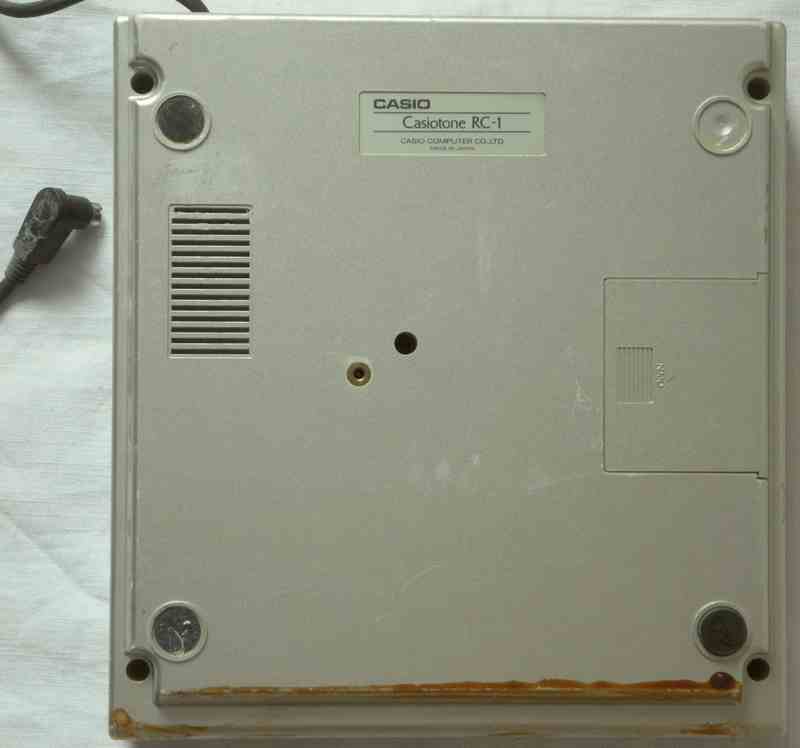
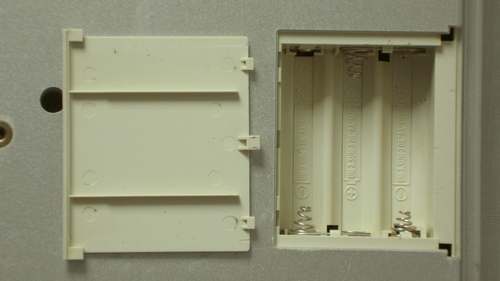
The RC-1 has a compartment for 3 AA batteries to supply the SRAM that holds
registration and sequencer data.
When only one keyboard is connected (no matter if in "upper" or "lower"
jack) its leftmost keys can act as "lower" keys for chord section, that
ends on key 18. This splitpoint can not be changed, but switching chord
mode off returns all keys to its internal main voice. The bass and chord
voice is produced inside RC-1 and sent through lineout. But to make this
work, the MB-1 unit needs to be plugged in with
data and power cable connected. So the RC-1 and MB-1 seem to depend on
each others in unobvious ways, despite my MB-1 doesn't work.
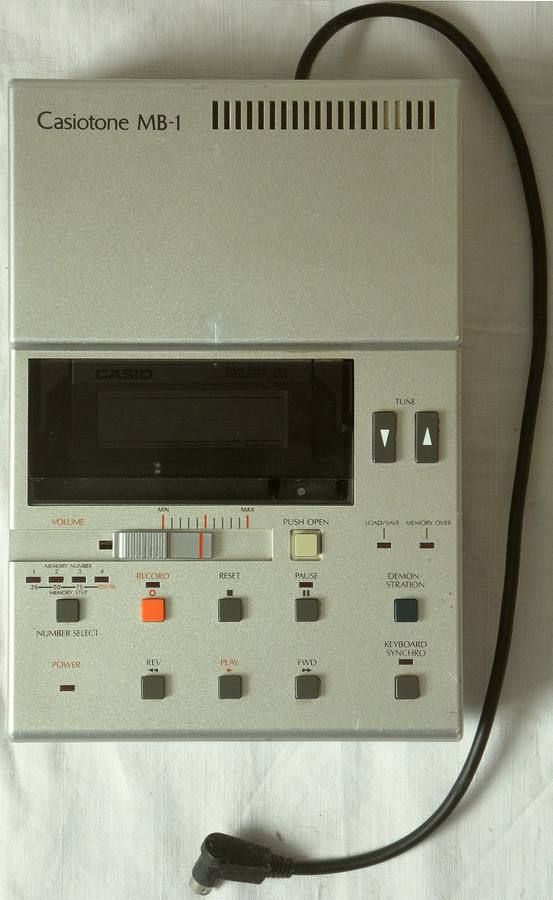
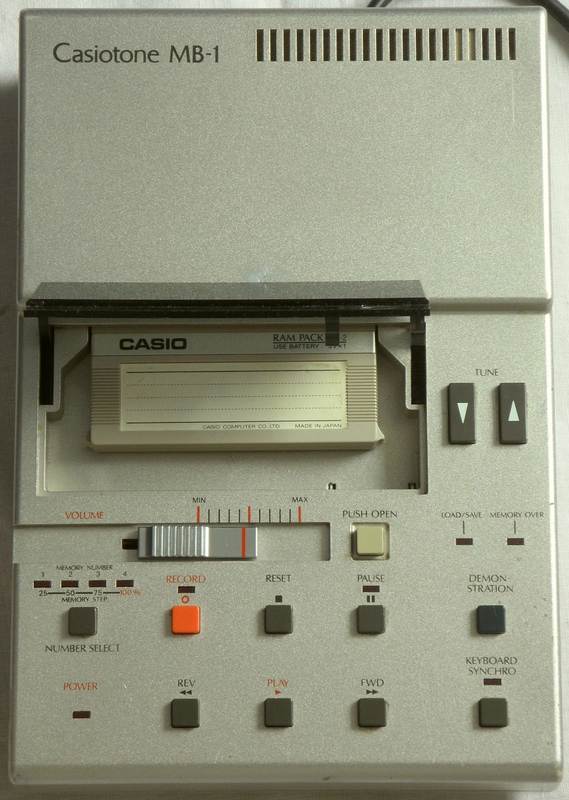
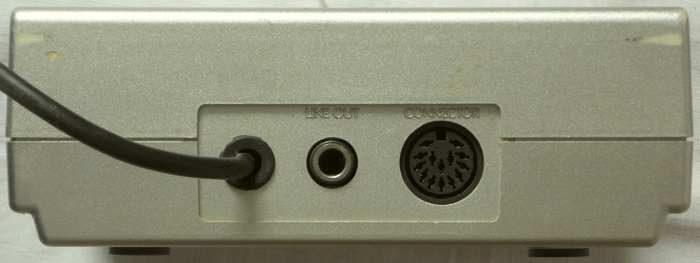
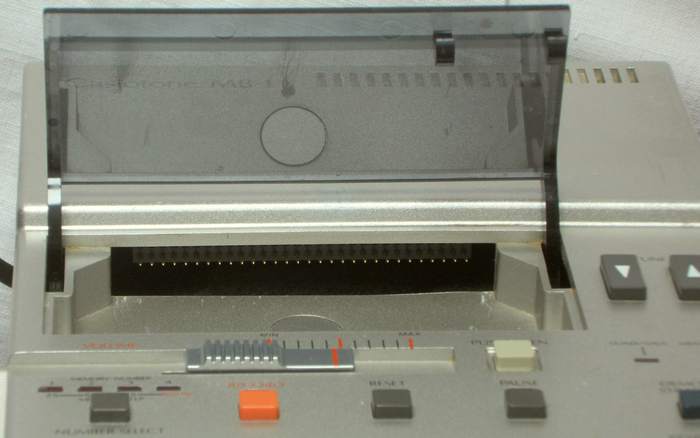
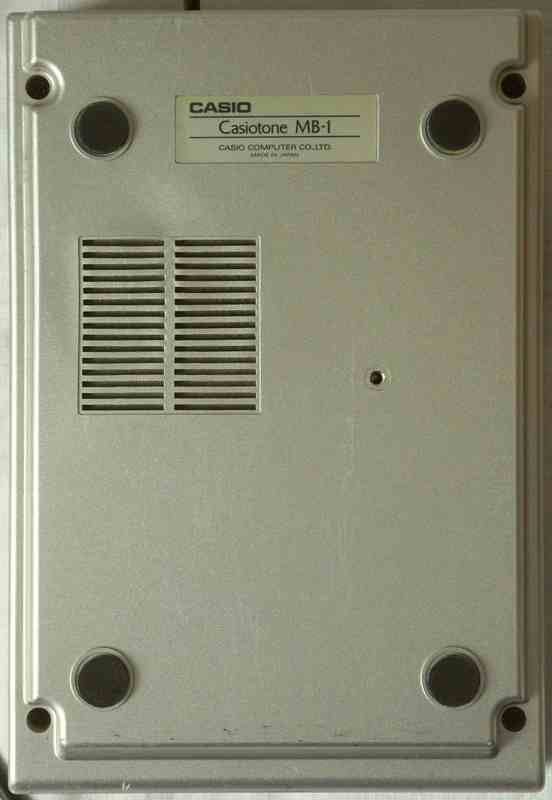
Casio MB-1
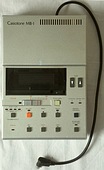
This is the sequencer unit of the Symphonytron
system. Mine likely is broken.
main features:
-
editable sequencer for 4 songs (948 steps)
-
RAM-Pack slot for RA-2
-
LED bargraph for memory usage
-
tuning +/- buttons
-
demo button
-
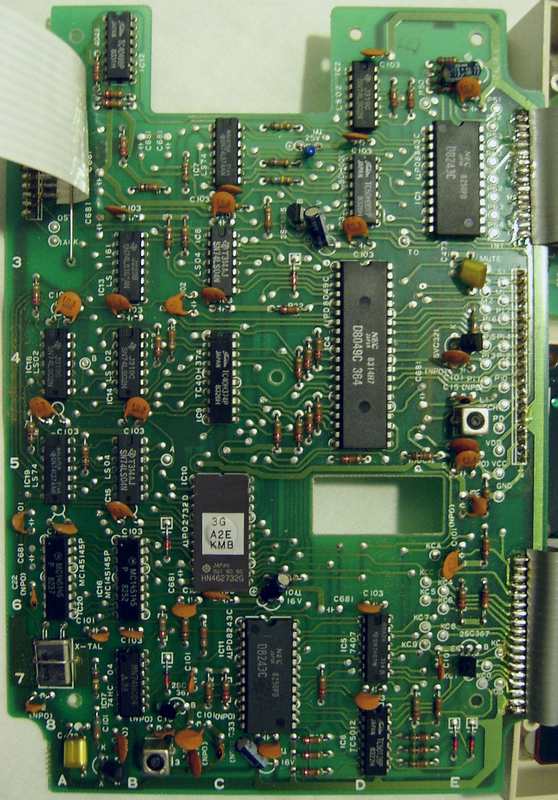
complex multi-chip hardware:
-
CPU= "NEC D8049C 364, 8314H7, Japan" (40 pin DIL, MCS-48)
-
2x sound IC= "NEC D931C
011, 8240K6, Japan" (42 pin DIL)
-
2x I/O IC= "NEC D8243C, 8250PD,
Japan" (24 pin DIL, Intel 8243)
-
eprom "Hitachi HN462732G" (24 pin DIL, 4KB, sticker "3G, A2E, KMB")
-
4x hybrid
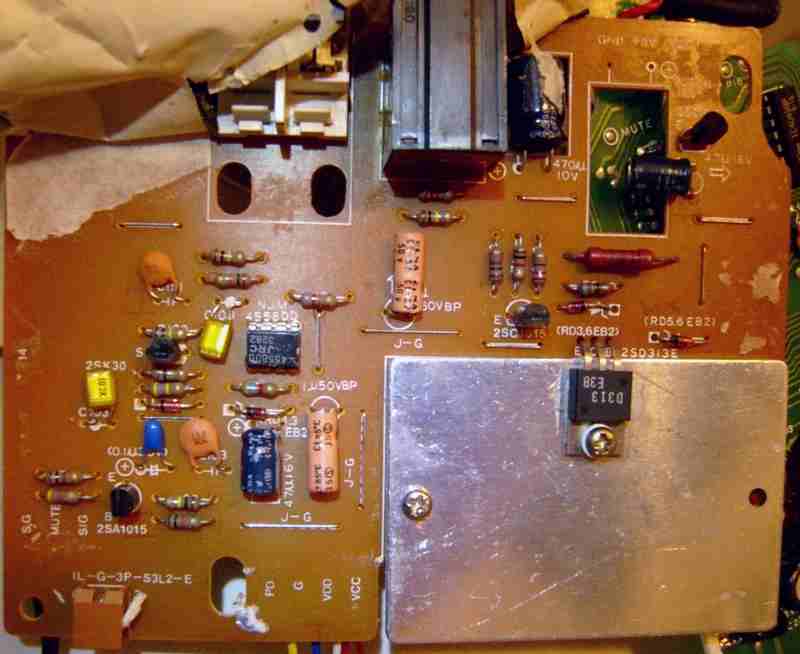
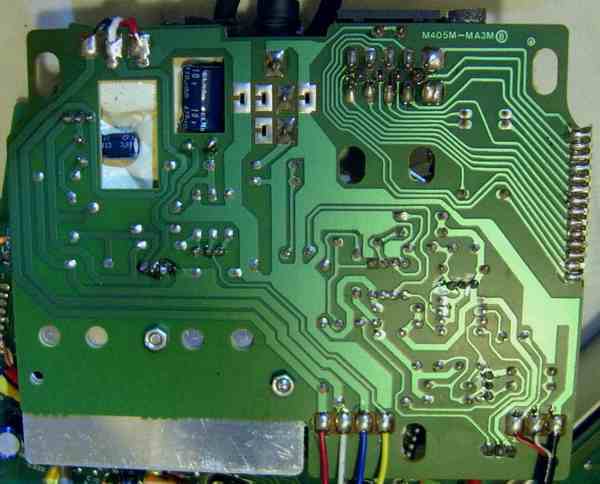
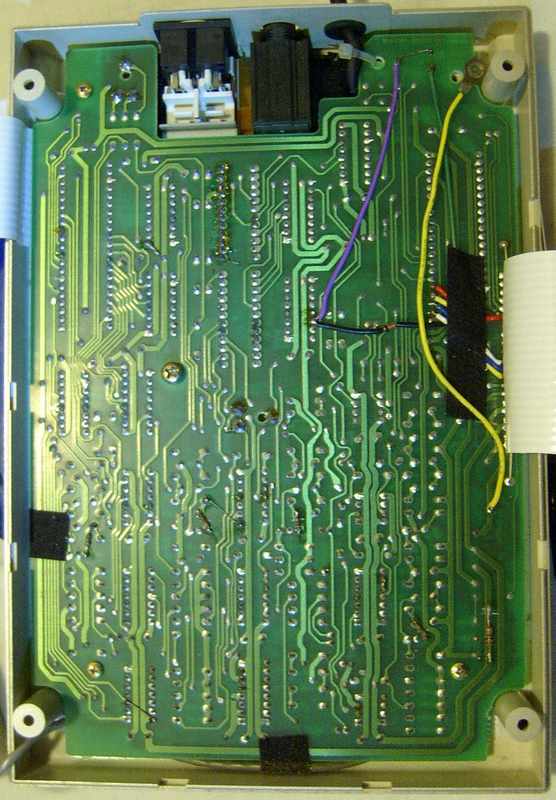
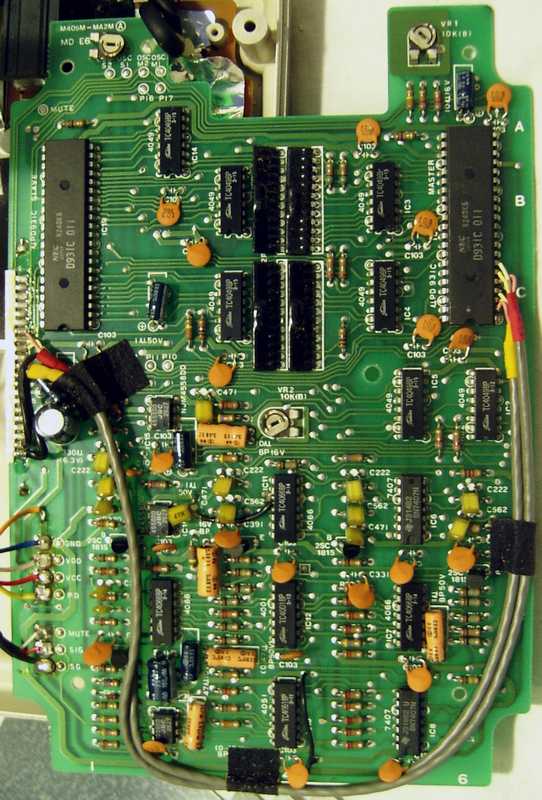
 |
 |
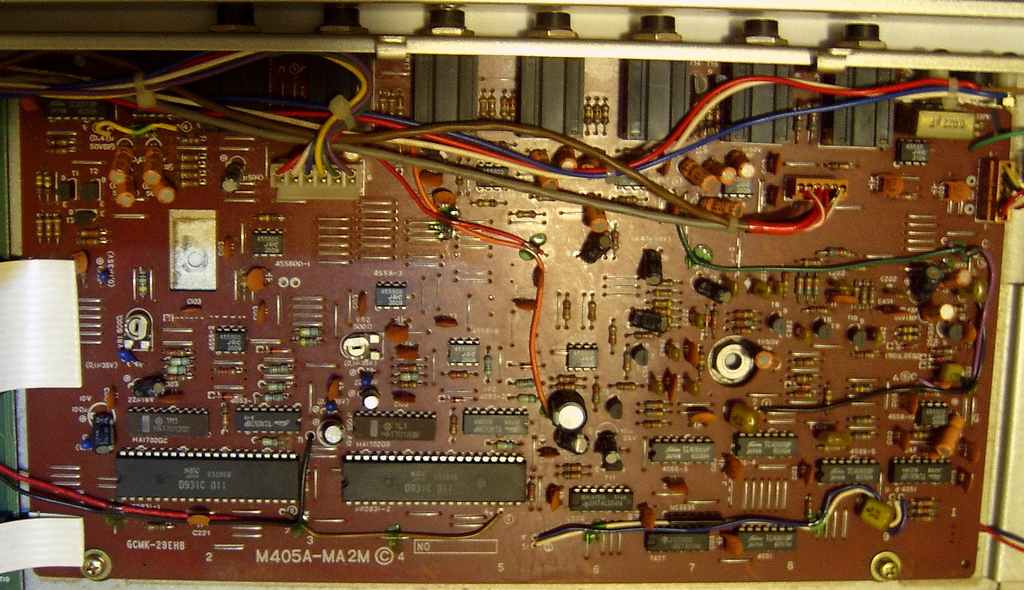
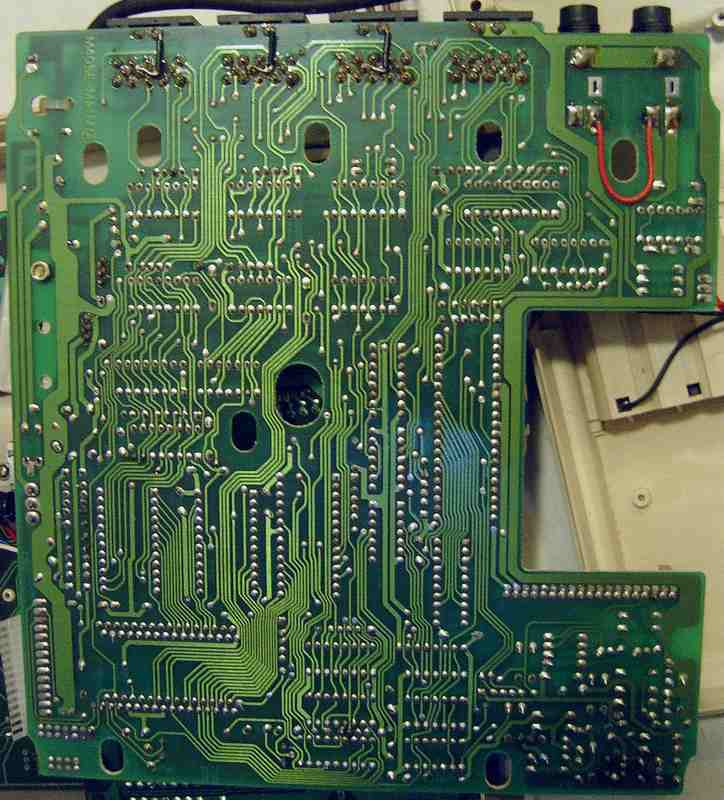
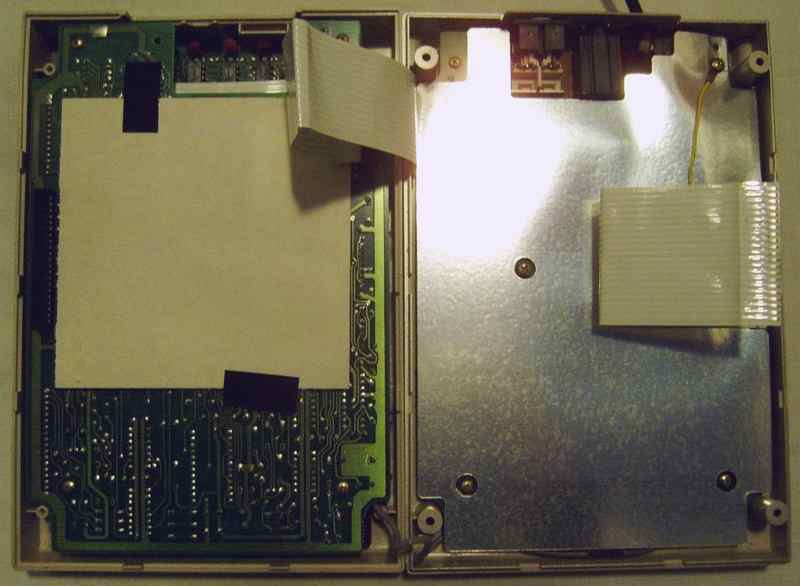
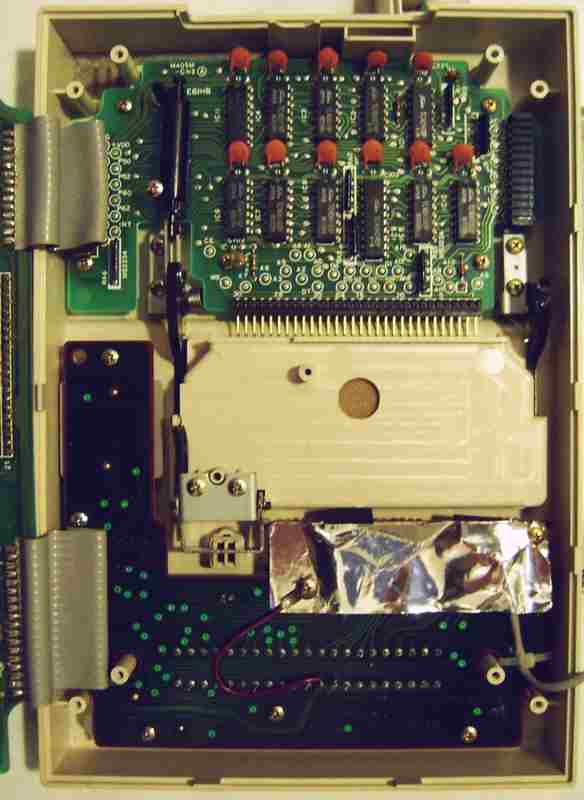
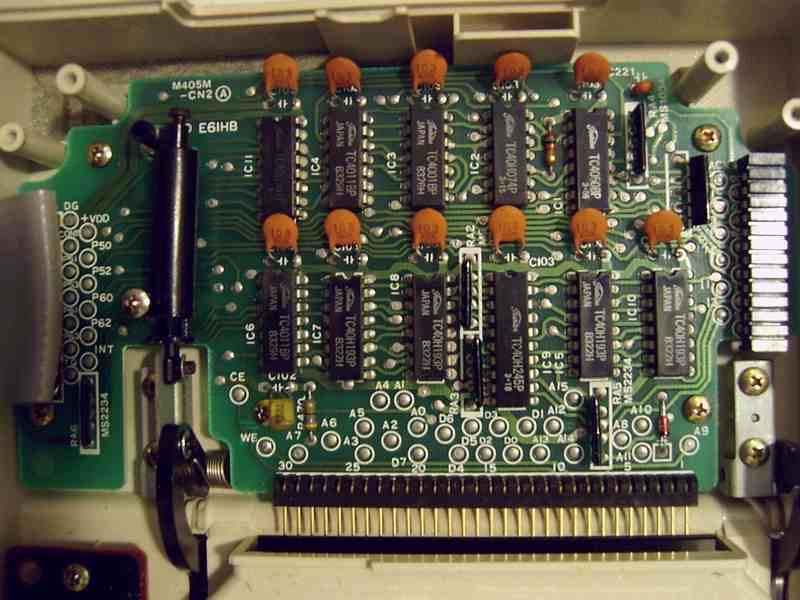
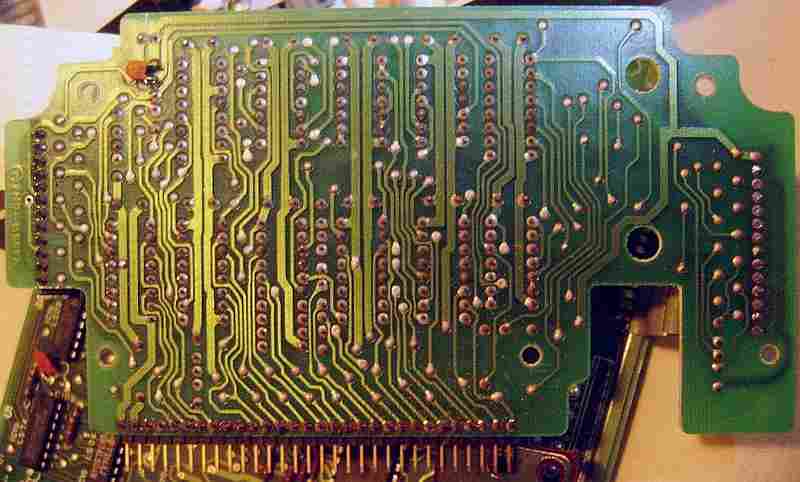
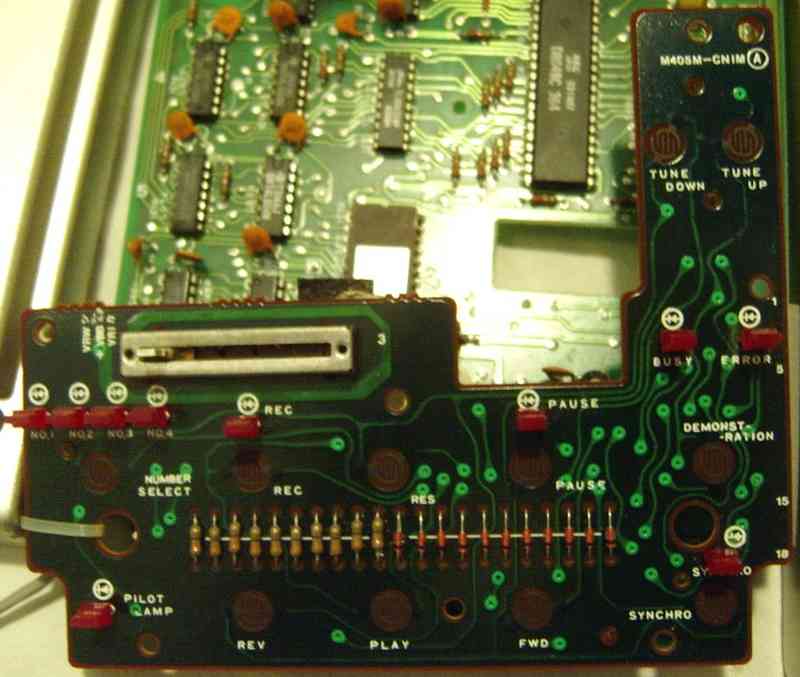
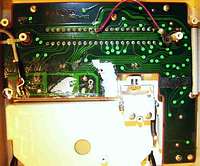
The small device is stuffed to the brim with
5 doublesided PCBs with its own sound generator, 4 hybrids and plenty of
logic stuff. |
The editable polyphonic realtime sequencer recorded all sounds (947 steps
in total, 58.5 steps of these only for function select events, all of them
shared among up to 4 songs). It could save them to the RAM-Pack RA-2,
which looks like a white version of the Casio RA-5 of Casio CZ-101
and related instruments.
My MB-1 doesn't work. The LEDs flash for a fraction of a second during
power on, but buttons don't respond and through lineout it produced a sort
of hum with fluctuating intensity that sometimes turns into a louder growing
digital buzz. Possibly the eprom is dead. But the MB-1 still does something
important, because the chord keysplit of RC-1
works only so long the MB-1 is connected and powered. My data cables (3
different) are from Atari ST diskette drives, so some pins for MB-1 may
be simply miswired; for connecting the keyboard they work ok.
I
first thought that it may need a complete Symphonytron system (with 2 keyboards
and pedalboard) to function properly, but the ad of the keyboard stand
CS-100 depicts a configuration like mine (1x CT-8000 + RC-1 + MB-1), which
shows that Casio supported this combination. Unknown is why the MB-1 contains
its own 2 sound ICs D931C; likely it was supposed to playback a track without
reducing the 8-note polyphony of the keyboards. I saw no RAM inside my
MB-1, so I think it uses those 4KB of the RC-1.
The manual mentions, that the MB-1 could copy a song from one RAM-Pack
to another, i.e. it is read into system RAM for use.
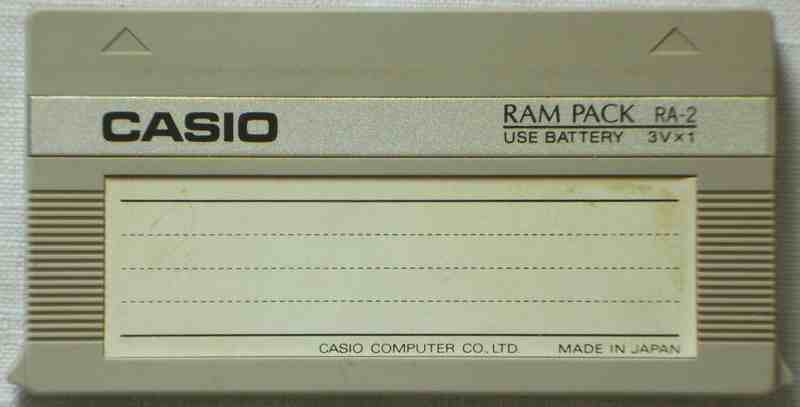
Casio RAM-Pack RA-2
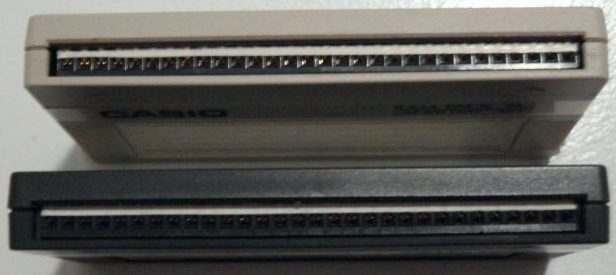
The RA-2 is the Symphonytron RAM-Pack,
which looks like a white version of the Casio RA-5 for
CZ-101
and related instruments. The capacity is 4KB.
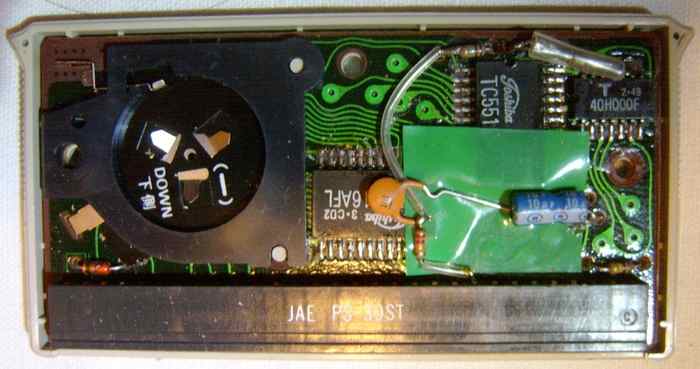
Originally a 3V lithium button cell "BR2016" was installed, but a stronger
"CR2032" fits as well because the case lid presses it on the contacts.
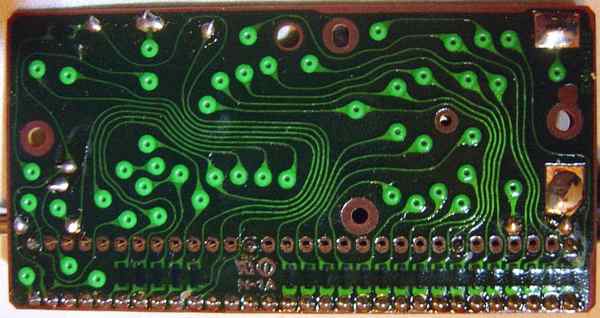
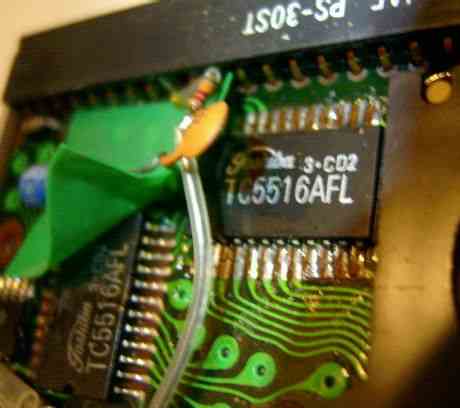
The case is closed with 3 screws. Inside are 2 SRAMs "Toshiba TC5516AFL"
(24 pin SMD, each 2KB), a logic IC "T 40H000F" (14 pin SMD), a diode, 2
capacitors (10uF electrolytic, 10pF) and 2 resistors. Most pins are wired
through carbon traces as resistors, those may be current limiters if 3V
powered SRAMs are connected to a 5V bus. |
| removal
of these screws voids warranty... |
|
|
 |

|
|
| |
back
|
|